


Study: Greek Islands Could Benefit From Floating Nuclear Power by 2035
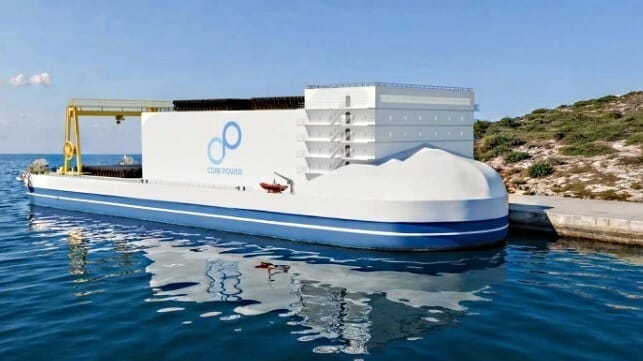
Greece's utility sector has invested heavily in renewables in recent years, and now generates so much solar power that it faces a high rate of curtailment on sunny days. Its mainland grid has been a net exporter of electricity since 2024, benefiting its neighbors. But non-interconnected Greek islands - like many in the Cyclades and Dodecanese - retain a dependence upon diesel-fired generating stations, which require imported fuels. One option for "greening" their power grids could be miniature nuclear power plants, built on barges and towed into position, according to a new study by the Deon Policy Institute, ABS, Core Power and Athlos Energy.
Floating nuclear power could work well for a coastal state like Greece, Deon found. The power generating capacity can be installed near to areas of high demand, whether to replace oil-fired power plants, add grid-independent capacity for seaport electrification, or supply data centers with a dedicated power source. Since they are small and modular, they would slot in neatly to meet small-scale demand changes, and they could be moved around when needed by towing. Greece's maritime industrial base and know-how also favor construction and operation of floating solutions.
Floating nuclear power is a mature technology with no technical hurdles remaining for implementation, Deon concluded. Regulatory work remains to be done, and public acceptance must be secured, but otherwise a floating nuclear plant could be in operation in Greece by 2035-40.

that matters most
Get the latest maritime news delivered to your inbox daily.
To get there, near-term needs include integrating nuclear power into Greece's national energy plans, strengthening the regulatory framework, and building public acceptance. Success will depend on "whether political momentum can be translated into long-term institutional commitment, regulatory preparedness, and broader public acceptance," the authors concluded.
"These initial findings shed important light on how FNPPs can be assessed and integrated within existing frameworks, a critical question as the industry moves toward practical deployment. The real challenge before us is integration into policy and regulatory frameworks, and ABS is committed to helping the industry navigate that path," said Patrick Ryan, ABS Senior Vice President and Chief Technology Officer, in a statement ahead of next week's Posidonia conference in Athens.
