
Stock Check on Global Oil & Gas on Cusp of War Decision
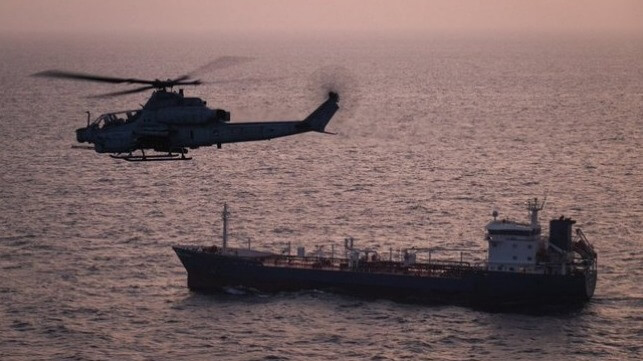
A flurry of diplomatic movements, involving delegations from Pakistan and Qatar travelling to Tehran and the Iranian Foreign Minister travelling to Muscat, plus a measured statement by Secretary of State Marco Rubio on camera during a visit to India, give a strong indication that a denouement is approaching in negotiations between Iran and the United States over their suspended conflict. Several senior figures in the administration have made sudden returns to Washington, DC, within the weekend, and a call is being made with regional leaders. This impression is reinforced by heightened levels of U.S. military movements being made to CENTCOM’s region, which one might expect if a return to warfare is being prepared for, should there be a failure at the last hurdle to achieve a diplomatic breakthrough.
Whether the conflict is settled within the next few days or not, the shipping community needs to be ready. The loss of 14 million barrels per day of oil, which used to come through the Strait of Hormuz, has been calculated by Reuters and Kpler to be worth more than US$50 billion since the beginning of the war, sufficient to keep global shipping fueled for 4 months, and a hole that is going to take some filling. Should the war end this week, there will be a rush to restock to avoid imminent shortages, with oil afloat in the Gulf the first to get on the move. Conversely, a resumption of warfare will generate further safety concerns for ships in the danger area, but also put increased focus on oil stocks held afloat, particularly in Southeast Asia.
As yet, the developed world has seen substantial price increases for both oil and gas, but no significant shortages except in niche areas. U.S. production of both oil and gas has soared to maximum available capacity, placing a strain on the infrastructure, particularly so when maintenance is delayed to exploit the high prices, which are likely to fall back when the crisis abates. Higher prices in the West have curtailed demand to an extent, with alternative energy sources being used where these are available. Sanctions against imports from Russia have been relaxed in some narrowly-defined shortage areas as a contingency. The same is very much true of China, where reserves estimated at 1.1 billion barrels remain healthy, and consumption has been reduced in the light of higher prices. Politically, China is not so badly affected by shortages that it felt any need to help President Trump out with the issue on his recent visit to Beijing. For the moment, President Xi Jinping is comfortable enough to sit on the sidelines and let the United States sort the mess out on its own.
The most significant pinch-points are firstly in Japan and Korea, where even though strategic reserves are substantial, there is a high dependency on imports – up to 85 percent in the case of Japan, in part a failure to replace indigenous energy generation following the closure of nuclear plants in the wake of the Fukushima disaster in 2011.

that matters most
Get the latest maritime news delivered to your inbox daily.
Elsewhere in Asia, India has benefitted from a U.S. relaxation of sanctions on Russian oil. Thailand still has 110 days of stock, and is preparing for shortages at the end of June – but again, price rises have killed off some local demand. The countries really suffering shortages are those unable to afford the higher prices of oil imports, such as Bangladesh and Myanmar. But throughout the region, the biggest effect is not the shortage of refined stock but higher prices at the pump, which have a significant dampening effect on general economic activity.
For the moment, one of the biggest stock buffers is the Iranian oil held on ships, principally in the Yellow Sea and off the east coast of Malaysia. But in the absence of cargoes getting through the U.S. naval blockade of the Strait of Hormuz, these stocks are now being eaten into, and not by Chinese consumption. Iran can seek to sell to whoever will give it the best price. Kpler estimates that these stocks have fallen from 85 million barrels held afloat in early February to 51 million barrels in mid-May. Contrary to Iranian messaging, the U.S. naval blockade is effective. The US intelligence community, if given the task, has ample resources to track consignments of Iranian oil, even when AIS signals are switched off, using signal direction finding, radar, and thermal imagery, plus its global military presence.