
South Korea Gears Up to Implement U.S. Shipbuilding Investment Plan
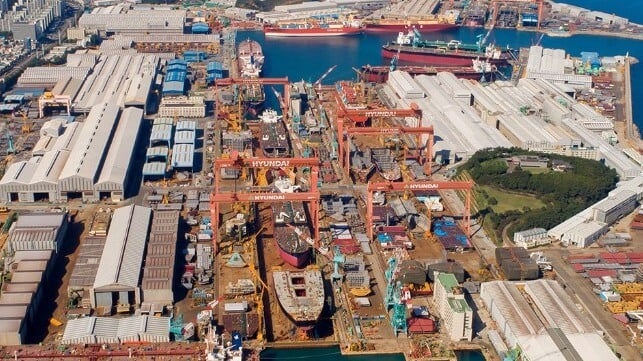
South Korea's government-backed policy banks are gearing up for a well-publicized initiative to invest in the U.S. domestic shipbuilding industry, with pledges worth billions.
The public face of the new Korean investment plan is a brand new coordinating body, the Korea-U.S. Strategic Investment Corporation (KUIC), headquartered in Sejong. KUIC is tasked with overseeing a planned $350 billion, multiyear investment plan in U.S. manufacturing, including $150 billion for investing in U.S. shipbuilding. The plan is capped at $20 billion per year overall, and if fully funded on schedule it would reach its target in 2043 (without adjusting for future inflation).
Park Jong-won, deputy trade minister, is the head of the new vehicle. "We will spare no effort to secure a sustainable foundation for growth in strategic industries agreed upon by the two countries, including energy and shipbuilding, while bolstering bilateral industrial cooperation," Park said at a launch ceremony.
The Korean government agreed to the investment plan in order to secure a favorable tariff rate of 15 percent from the Trump administration, maintaining competitive access to U.S. markets for Korean automakers and chip manufacturers. Without offering an investment deal and securing favorable tariffs, Korean firms would have been at a disadvantage to their Japanese competitors, who had already secured a 15 percent rate.
The legal basis for that tariff rate has since been thrown out by the U.S. Supreme Court, but the administration is expected to use other authorities to maintain it at the same level (or increase it if desired).
While Korea is pledging investment in U.S. shipbuilding, White House officials are exploring the option to offshore U.S. government vessel construction and maintenance to Korea, moving ordering activity in the other direction. The administration is currently seeking $1.85 billion in a pot of funding in a defense reconciliation bill for the purpose of studying shipbuilding overseas.

that matters most
Get the latest maritime news delivered to your inbox daily.
"The fact is, no one spends $1.85 billion studying something. That money is there for procurement of assets," an OMB official told Breaking Defense last month.
U.S. government vessel drydocking and maintenance work has already begun at Korean yards, starting with the naval auxiliaries of the Military Sealift Command fleet.