
Shanghai Exceeds 55 Million TEU in Container Throughput for 2025
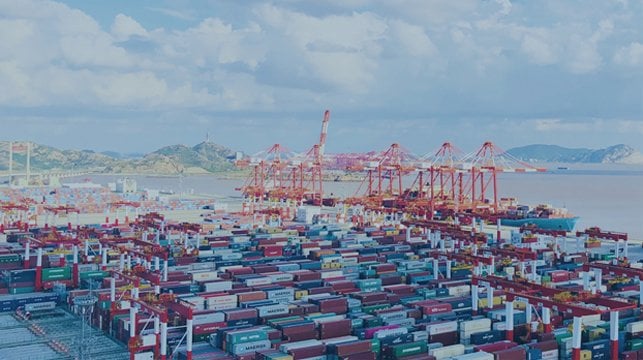
The Shanghai International Port Group is highlighting that its port operation has remained the world’s busiest container port for the 16th consecutive year. They also report completion of the 14th Five-Year Plan as it looks toward the future by taking more steps to build its role as a global container transshipment hub.
Releasing its final tally for 2025, SIPG says the Shanghai port overall handled 55.06 million TEU, which was a 6.9 percent increase in throughput. Over volume, however, lagged at 600 million tons, up just over 3 percent from the 580 million tons in 2024.
It reports that the Yangshan Deep Water Port accounted for just over half the port complex’s total volume, an increase of just over 10 percent for the port area’s throughput. Critically, it points out that the Yangshan Phase III Terminal surpassed 10 million TEU for the first time, highlighting its role as a core pillar of the port. Observers note that few ports around the world handle 10 million TEU in a year.
One of the key focuses for the port is growth in its role as an international transshipment hub. SPIG highlights its transshipment volume surpassed 7.9 million TEU, up 10.6 percent for the year. They said this is evidence of its reach and influence as a global hub. Efforts such as a water-to-water transshipment effort and increased efficiency helped it grow this operation.
The overall throughput they report “underscores the port’s resilience and stability as a critical node in the global supply chain.”
SPIG highlights a range of challenges that it had to address and manage in 2025. It points to “complex and volatile global trade conditions,” saying there were frequent geopolitical conflicts and an accelerated restructuring of global supply chains. SPIG points to deepening its strategic collaboration with shipping companies and improving resource utilization efficiency to help it manage the challenges. It also points to “extreme weather events” and surges in peak logistics periods.
Technology plays a critical role in the port’s ability to handle these massive volumes. It points to a rollout of automated terminals among the innovations. They are using digital twins and big data analytics to increase quay crane productivity. It also points to technologies such as smart yards and AI-based stowage models to significantly reduce the re-stowage rate. They call this movement “China speed.”
SPIG also highlights strong growth in its sea-rail inter-model volumes. They report it exceeded 1 million TEU for the first time, up just over 16 percent year-on-year.
Looking ahead, it says the operations will focus on strengthening hub resilience. One of the key goals is to increase the share of international transshipment cargo.
“SIPG will accelerate major infrastructure development, optimize port layout, and enhance container-handling capacity and vessel berthing efficiency. With a strategic focus on international transshipment, it will further expand global shipping networks and scopes of cabotage operations, and water-to-water transshipment, increasing the share of international transshipment cargo and consolidating its position as a core international transshipment hub in Northeast Asia,” the company writes in its report for 2025.

that matters most
Get the latest maritime news delivered to your inbox daily.
The volume growth came after a report that Shanghai, after 11 months, had already reached 50 million TEU. They said it was 26 days earlier than 2024, forecasting a new record for the full year. Shanghai had been expected to exceed 53 million TEU for the year.
The growth in volumes was not limited to just Shanghai. Last week, the operators of the Ningbo-Zhoushan port reported it had handled 43 million TEU in 2025. It continues to rival Singapore, which reported today that it had a throughput of 44.66 million TEU in 2025, up 8.6 percent. Singapore handled a total of 3.22 billion gross tonnage of vessel arrivals in 2025, which was up 3.5 percent year-on-year.