
Shadowy Tanker Broadcasts “Pirates Aboard Help” Sailing Off Yemen
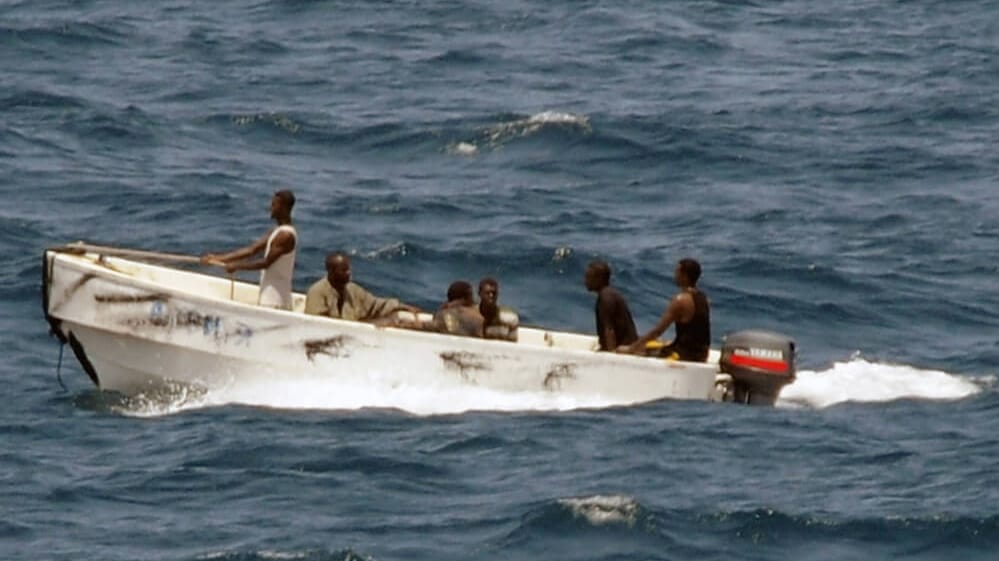
For the second time in a week, Somali pirates have apparently struck, and this time they have taken control of a sanctioned product tanker with a shadowy record linked in part to Iran. It would be the sixth ship currently in the custody of the pirates and possibly the fifteenth incident so far this year, putting Somali piracy activity at a 10-year high.
The tanker broadcast a distress call on VHF 16 while it was 136 nautical miles east of Al Mukalla, Yemen. UK Maritime Trade Operations reports the tanker said it was being approached by an unauthorized vessel while it was westbound in the Gulf of Aden. UKMTO later received confirmation that six armed pirates were aboard and had taken control of the tanker operating the likely false identity of Sibu 1. The vessel had been operating dark, but the crew appeared to hastily transmit a final message on AIS reading “PRIRATE ONBOARD HEL,” [sic] before the ship was redirected to Somalia. The attackers stated intent is to proceed toward Bosaso, Somalia.
The 32,238 dwt product tanker, which was built in 2001, is alternately showing on databases under the name Seamull, with reports that its claimed registry in Eritrea is false. Ownership is equally murky.
The U.S. Treasury included the vessel in a sweeping action in December 2025 that targeted 29 shadow fleet vessels and their respective management firms that the Treasury’s Office of Foreign Assets Control (OFAC) asserted had transported hundreds of millions of dollars’ worth of Iranian petroleum products. It was targeting Hatem Elsaid Farid Ibrahim Sakr, an Egyptian businessman whose companies OFAC said were associated with seven of the 29 shadow fleet vessels included in the action, as well as multiple shipping companies.
Seamull was one of three vessels listed as having recently been transferred into the management of a UAE-based company. OFAC said the vessels had transported Iranian petroleum products, including naphtha and gasoil, on multiple occasions, and had made port calls to Houthi-controlled ports in Yemen.
It is the second suspicious vessel seized by pirates this week in the Gulf of Aden. On August 17, approximately eight pirates, reported to be armed with AK-47 type weapons, took control of a small cargo ship approximately three nautical miles from the coast of Somalia. The company’s chief security officer told UKMTO that the crew mustered in the citadel, but the pirates gained access, and the crew was relocated to the bridge. At last report, the vessel was being directed toward Somalia.
The 1,400 dwt cargo ship Lutuf had been sailing toward Tanzania. It is registered in Cameroon and reportedly linked to Turkish interests. In an unconfirmed report from sources in Somalia published by the Associated Press, the ship is being accused by the Somalis of transporting weapons bound for a Turkish military training facility as well as communications and satellite equipment.
AP reports that Turkish-owned vessels approached the hijacked ship and Turkish helicopters and drones were monitoring the area. For now, the ship appears to be in the pirates’ hands, anchored off the coast of Somalia, along with the Honour, Sward, Eureka and Asna, which had been seized between April and July.
Governments, including those in Pakistan and Egypt, have been attempting to use diplomacy to free the kidnapped crewmembers. The NGO, the Global Initiative Against Transnational Organized Crime, reported the pirates demanded as much as $10 million for the small product tanker Eureka (3,353 dwt) that was seized in May. There have also been reports of infighting among the pirate action groups. The NGO speculates that the Houthis could be linked to some of the activity supporting the pirate action groups. It also believes the ransom paid by the Chinese for a fishing boat set a precedent that could be fueling the renewed activity.
Danish Shipping issued a warning on August 19, reporting that the number of piracy-related incidents off Somalia is at its highest level in ten years. Citing data from the ICC International Maritime Bureau, they said there had been 13 incidents in the first seven months of 2026, versus five last year, and eight the year before. The last spike in the number of incidents had been in 2018.
“Within Somalia, challenges such as drought, illegal fishing, economic hardship and weak government structures may be contributing to making piracy a more attractive ‘career path’,” says Jacob K. Clasen, Deputy Director General and Deputy CEO of Danish Shipping. Also, the spike in the price of oil since the start of the war in the Persian Gulf has made tankers a more attractive target to the pirates.

that matters most
Get the latest maritime news delivered to your inbox daily.
Clasen notes, “It is worth highlighting that vessels which follow the international Best Management Practices recommendations are generally far less vulnerable to pirate attacks. Shipping companies should carry out a thorough risk assessment and, on that basis, implement the appropriate security measures.” Danish Shipping points to security measures that may include physical protection measures such as barbed wire, securing access points, water cannons and CCTV surveillance, as well as enhanced procedures for monitoring, reporting and emergency preparedness.
The EUNAVFOR Operation Atalanta remains active in the area as a deterrent in international waters. China reports that it maintains a force in the region, and the Indian Navy has been at the forefront of countering attacks and boardings. All agree, however, that the best offense is a strong defense, or avoiding the area when possible.
