
Seaspan Inks Design Deals for U.S. Coast Guard Arctic Security Cutters
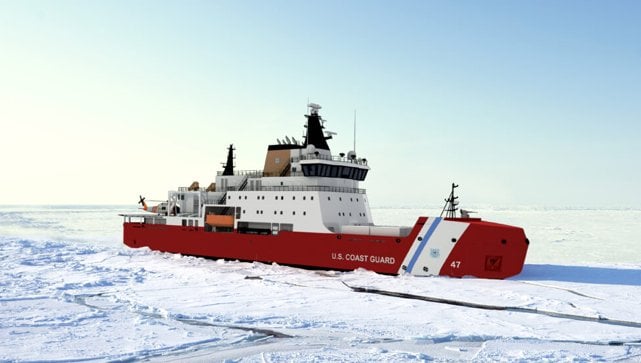
Canada’s Seaspan Shipyards is highlighting the readiness of its design for the new class of icebreakers, reporting that the program is ready to move forward to meet the U.S. expectations. Just a week after the U.S. Coast Guard completed construction contracts with Rauma Marine in Finland and Bollinger Shipyards in Louisiana, Seaspan has inked design deals with both yards, highlighting that the design is ready to move into immediate production.
The addition of a fleet of new Arctic Security Cutters is part of the Trump administration’s priority to increase U.S. presence in the region. The first shipbuilding deals were set with tight delivery deadlines. The administration has said the first phase could add as many as 11 cutters, with the first six now on order. At the same time, it also looks to expand the U.S. presence, renewing its drive for Greenland, saying it is critical. Trump plans to press negotiations and has said he would not rule out military action to complete the annexation to provide more basis in the region.
Rauma has been contracted to build up to two vessels in Finland, with delivery expected in 2028. Bollinger will construct up to four cutters in the U.S., with the first U.S.-built vessel expected in 2029. To achieve these ambitious deadlines, Seaspan highlights that the design is ready to proceed, having been completed in Canada in coordination with Finland’s Aker Arctic Technology. The cooperation between the United States, Canada, and Finland builds on a tripartite agreement set in place by the Biden administration in 2024.
“The MPI design is a true success story under Canada’s NSS,” said Seaspan Shipyards’ CEO John McCarthy. “The interoperability resulting from a common design and supply chain between the Canadian and American coast guard fleets will create countless opportunities for collaboration throughout the vessels’ operational lives, aligning with the greater goals outlined in the trilateral ICE Pact framework and generating significant lifecycle cost savings for both countries.”
Originally designed for the Canadian Coast Guard’s (CCG) long-range, multi-mission operations in extreme Arctic conditions, the Polar Class 4 icebreakers will provide the design for the American ships. Seaspan highlights that the ships will have a capability to break through four feet of ice and travel 12,000 nautical miles, operating for up to 60 days. They are approximately 9,000 tons displacement (7,600 gross tons) with a length of 328 feet ( meters). They will carry a complement of approximately 85.

that matters most
Get the latest maritime news delivered to your inbox daily.
Seaspan highlights that it has also already selected many of the program’s system and equipment suppliers as a part of that process. Using this established design and existing supply chain will allow the ASC program to move quickly.
The U.S. turned to Canada and Finland to tap their expertise in designing and building large icebreakers. Seaspan says its current orderbook includes the largest portfolio of icebreaking vessels in the world under Canada’s National Shipbuilding Strategy, a long-term project to renew Canada's federal fleet of combatants and vessels for the Coast Guard and other services. Seaspan’s orders include one of Canada’s PC2 heavy polar icebreakers as well as up to 16 Multi-Purpose Icebreakers.