
Norway Bans Hormuz Transits, India Makes a Deal With Iran for Safe Passage
The Norwegian Maritime Authority has announced the strictest step yet made by any government agency or industry association to address the risk of Iranian attack in the Strait of Hormuz: an inbound transit ban. Effective Thursday, no Norgwegian-flagged ships are permitted to enter the Arabian Gulf, regardless of the shipowner's own risk assessments.
"We do not believe any shipping companies are planning to sail into this area in the near future, but as the situation has now developed, it is important for us to emphasize that we are now moving from a strong recommendation related to ship traffic in the area to a ban on entering the Strait of Hormuz," said Maritime Director Alf Tore Sørheim.
Companies with Norwegian-flagged vessels already located in the Gulf may still make their own assessments about whether it is safer to stay in the region or to attempt a run through the strait to reach safety. Recent events off the UAE and Iraq have shown that even vessels far from Hormuz are still vulnerable to Iranian strikes.
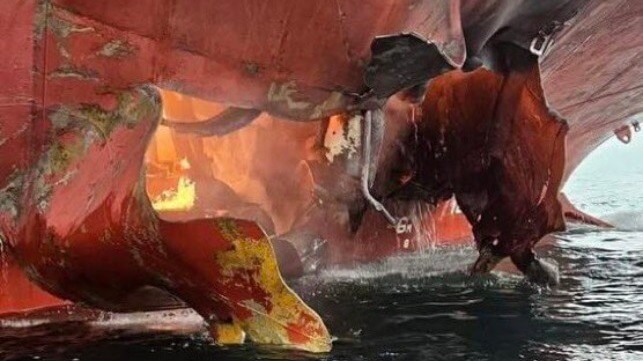
The directorate also warned that trying to leave the Gulf may attract an attack, as seen with the strike on the Thai bulker Mayuree Naree.
"We have good dialogue with the shipping companies with the Norwegian flag that have ships in the area. We understand that the situation has deteriorated further, and that we are now experiencing a greater degree of insecurity," Sørheim said.
Vessels flying all other flags may still take the risk of an inbound transit, and the assessment is up to each owner and their counterparties. Prior to transit, crewmembers have the right to notification of risk and disembarkation if desired, plus hazard pay if they accept the risk of injury or death on behalf of the voyage's commercial stakeholders.
On Thursday, following an urgent meeting convened by IMO Secretary-General Arsenio Dominguez, bulker industry association Intercargo stressed that seafarer safety and wellbeing remains an "overriding priority."
"Bulk carrier operators and masters are encouraged to exercise prudent judgement and thorough risk assessment before sailing in high-risk areas. We recommend that members follow the advice of their P&I Clubs, legal counsels and insurers," said Intercargo Secretary General Kostas Gkonis in a statement.
Synthetic aperture radar monitoring of the strait indicates that a handful of vessels are making the run each day - but many appear to be shadow-fleet tankers that carry Iranian cargoes, unlikely to attract Iranian attacks.

that matters most
Get the latest maritime news delivered to your inbox daily.
Bloomberg and Reuters report that India is going in the opposite direction from the Norwegian authorities: it is negotiating with the Iranian regime for safe passage for its tankers. An initial tranche of 20 crude tankers and LPG carriers will be allowed through the strait under the agreement, following direct talks between Indian external affairs minister S Jaishankar and Iranian foreign minister Abbas Araghchi, government sources told India Today. An Iranian government source denied that such an arrangement had been reached, according to Reuters.
India ordinarily sources about 45 percent of its oil from the Arabian Gulf, and while it has managed to find replacement volumes for the near term, a safe passage agreement for Hormuz would give it an energy-security lifeline that no other Gulf-dependent nation currently possesses.