
NGOs Urge EU to Keep South Asian Yards Off Authorized Ship Recycling List
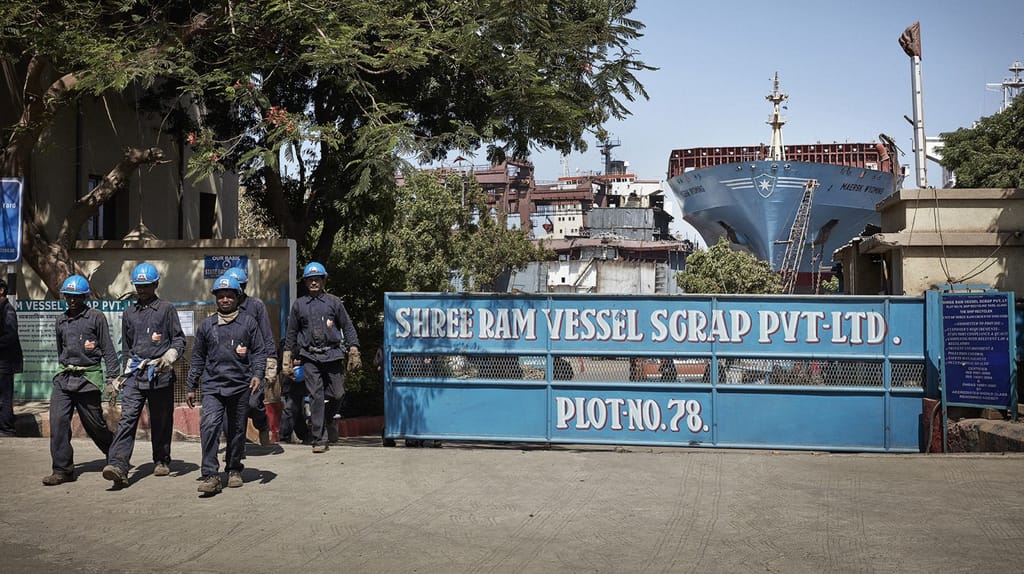
As the European Union gears to announce its updated list of approved ship recycling facilities, pressure is mounting for the bloc not to include two Indian yards over allegations that they rely on hazardous beaching methods.
The European Commission is expected to unveil the 16th edition of its approved list next month, which for the first time is proposing to include yards in South Asia. Indian yards Shree Ram and YSI Recyclers applied to be included in the list; if added, they will be able to pay high South Asian scrap prices to European owners, in fully lawful transactions.
Days before the unveiling of the updated list, a group of NGOs, steel companies, recycling yards and unions have teamed up to exert pressure on the Commission not to include the two Indian yards on the list. Through an open letter to Commissioners Jessika Roswall and Stéphane Séjourné, the group said that the yards rely on the beaching method whereby vessels are dismantled directly on the intertidal mudflat, a method that is not only hazardous to the environment but also poses economic and safety risks.
In the letter, the group argues that the Alang-Sosiya and other beaching regions in India are known for contamination of soil and marine ecosystems. They cite a case in which a heavy fuel spill occurred in a yard neighboring one of the yards being proposed to be included in the EU list. The spill contaminated parts of the Gujarati coast, spreading easily along the tidal mudflats.
The open letter by NGO Shipbreaking Platform, EUROFER, IndustriAll Europe, European Environmental Bureau, Recycling Europe, and Transport & Environment also highlights that governance and environmental monitoring of Indian yards may have limitations. They allege that the regional Gujarat Pollution Control Board has issues with chronic understaffing, inadequate technical capacity, insufficient monitoring and sampling, and weak transparency.
“While individual yards can commit to go beyond their national legal framework, it remains unclear how the Commission intends to ensure compliance in third countries without strong public enforcement and environmental governance at national level,” states the letter.
The European Shipowners Association and five other major shipping associations have supported the inclusion of the two Indian yards on the updated list on the basis that it will help address capacity challenges in the bloc. According to the NGOs, however, EU yards have the technical capacity to dismantle the bloc’s flagged fleet - if not the capacity to pay South Asian prices for demolition tonnage.

that matters most
Get the latest maritime news delivered to your inbox daily.
“Any rubberstamping by the EU of the beaching method would only worsen unfair competition already faced by the European ship recycling sector,” the letter notes, adding that the EU should apply uniform standards across all listed facilities regardless of geographical location.
Apart from including the Indian yards, the updated list is also expected to remove four facilities located in France, Norway and Turkey.
