
Marine Corps Picks Up Drones for Surveying the Surf Zone
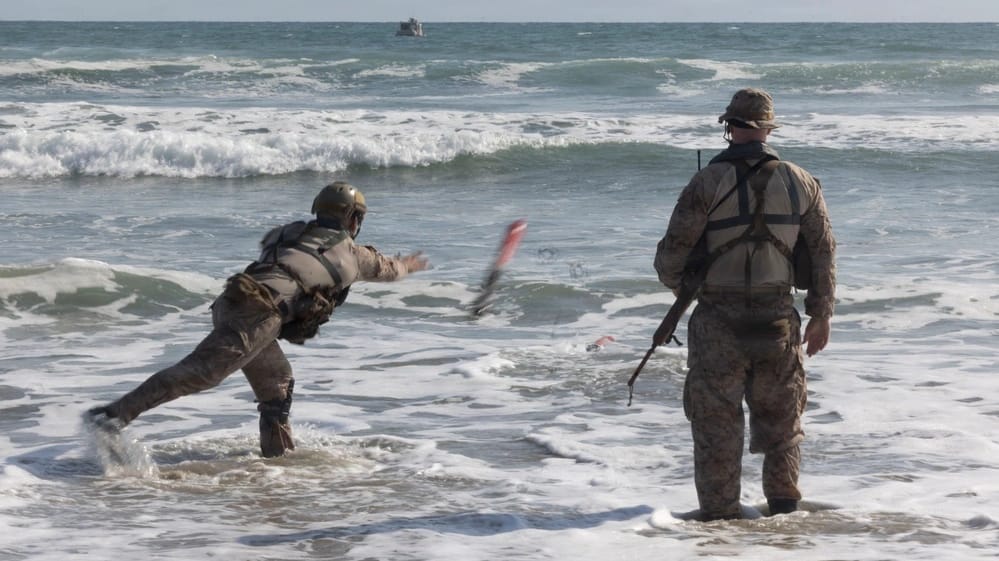
The U.S. Marine Corps is working with a robotics contractor to field small submersible drones for use near shore, bringing automation to one of the more dangerous jobs in the service - amphibious reconnaissance.
The Marine Corps' signature mission is over-the-horizon amphibious assault, launching from a specialized Navy vessel in armored amphibious vehicles and motoring ashore through surf, beach obstacles and enemy fire. But it is not done without preparation. In advance of a large operation, commanders need to know what the beach and the surf zone look like, so they send a small handful of amphibious reconnaissaince Marines to look. Beyond basic observation, these teams are trained to survey and map the battlespace in advance. The Marine Corps' capabilities for this task overlap with the U.S. Navy SEALs' mission set, and both share a similar WWII origin story.
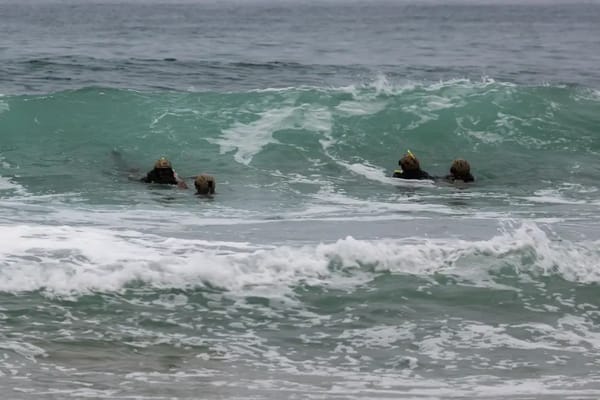
Traditional recon methods (USMC file image)
USMC trial of Jaia drones in surf (USMC)
"The way that the Marines do this is that 24 Marines jump off a big ship into a rubber boat. The rubber boat transits quite a long way. Two miles out, the Marines get out, they swim, and they go into the surf zone, and they spend eight hours characterizing the conditions in the surf zone," explained CEO and co-founder Ian Owen in an interview with Marine Technology earlier this year. "JaiaBots, eight of them can do in 30 minutes to one hour a complete characterization of the surf zone, and then they can sit there providing real-time data back to the user."

that matters most
Get the latest maritime news delivered to your inbox daily.
By handing off that part of the recon mission to a robot, when and where appropriate, the Marine Corps can reduce the risk of casualties and free up its units to work elsewhere. “Sending Marines into the surf zone to manually collect data takes time and exposes them to unnecessary risk. JaiaBot gives us the opportunity to put autonomous systems in harm’s way instead and collect critical information faster," said Josh Mickles, a former USMC staff sergeant and current VP of Customer Success at Jaia.
The Marine Corps likes the idea enough that it is spending $6 million to buy more and cover the cost of training. U.S. Army customers are also using the device to plan river crossings, a similar application. Work on an acoustic bathymetry variant is under way, supported by the U.S. Army Corps of Engineers.
