
LNG Carrier Hit By Iranian Attack in Strait of Hormuz
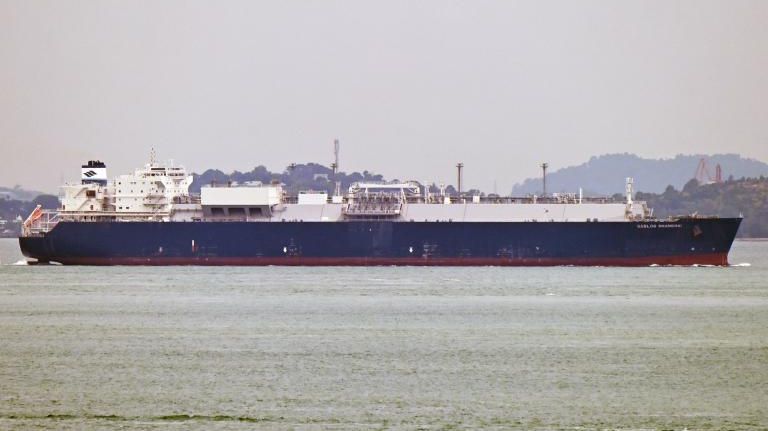
Shipping activity overnight and into August 1 appears to have been subdued in the Strait of Hormuz, with two Iranian attacks on vessels in transit.
At 2206 on Friday, the master of a Liberian-flagged tanker reported the impact of a missile or drone five meters off the starboard side of the ship as it was proceeding westwards in the Omani coastal channel. There was no damage to the ship, nor any casualties, and the vessel continued on its course.
At 2330 on Friday, the Bermuda-flagged LNG tanker Gaslog Shanghai (IMO 9600528) was struck in the area of its engine room by an unknown projectile at a position 11 nm northeast of Limah. The vessel lost all power and was disabled, but with no casualties reported amongst the crew. The tanker was travelling south on the Omani coastal route, and was laden with Qatari LNG loaded at Ras Laffan. It is not clear if the tanker is now under tow or is drifting.
Overall, traffic through the Strait of Hormuz appears to be down, both on the Iranian northern route and the Omani coastal route, on which vessels can receive military guidance from the US Navy. Reflecting these reduced traffic levels and the subsequent backlog, loadings within the Gulf are also curtailed.
Traffic seemed to be flowing much as normal through the Bab el Mandeb on Saturday August 1, from a snapshot of activity seen mid-afternoon. Kpler are noting between 40 and 50 transits every day, consistent since July 28. Chinese vessels appear to be proceeding full steam ahead though the Bab el Mandeb, displaying their destinations on AIS as CHINA CREW & OWNER, with the latest example a bulk carrier coming through to Jeddah from China on July 30.
The EU naval Operation Aspides is escorting vessels through the Bab el Mandeb, with the Aspides headquarters publishing photographs of the Italian Carlo Bergamini Class frigate ITS Bergamini (F590) and the Greek MEKO 200 frigate HS Psara (F454) both conducing escorts. French naval vessels are also likely to be involved, but under national rules tend to be camera-shy for operational security. The Greek commander of the operation, Rear Admiral Vasileios Gryparis, has reported an upsurge in requests for escort.
The confusion over the attack on the Egyptian LNG terminal at Damietta on July 29 appears to have settled. It appears that the primary target was the Bermuda-flagged LNG floating storage and regasification unit Gaslog Salem (IMO 9638915), which was struck on the starboard side near the No.2 forward cargo tanks. The Marshall Islands-flagged LNG tanker Energos Winter (IMO 9256614) looks likely to have been struck by debris from the attack, or was affected by the spread of fire from the Gaslog Salem.
Damietta has been in the news recently, following the announcement that gas from the now financed Cronos gas field in the Cypriot Exclusive Economic Zone is to be brought ashore at Damietta by pipeline, to be liquefied for export as LNG. The Gaslog Salem was in the interim going to act as a reception vessel for gas being imported by Egypt, needed for domestic consumption before gas begins to flow from Cronos - a plan now disrupted by damage to the unit.

that matters most
Get the latest maritime news delivered to your inbox daily.
The Houthis have denied that they were responsible for the attack. This is in keeping with the somewhat restrained campaign that they are waging. The Houthi leader AbdulMalik al Houthi made clear in a speech on July 30 that the group's objective is to extract concessions from the Saudis in ongoing final peace settlement negotiations. The Houthis are now asking for a share of the revenues from the oil and gas fields that remain in government hands, as well as $13 billion in back pay for the Houthi soldiers who have been waging war on the recognized government and the Saudi-led coalition since 2014.
Top image: GasLog Shanghai (file image courtesy mgklingsick / VesselFinder)
