
Japan Conducts Demonstration Voyage of a Hydrogen-Fueled Tanker
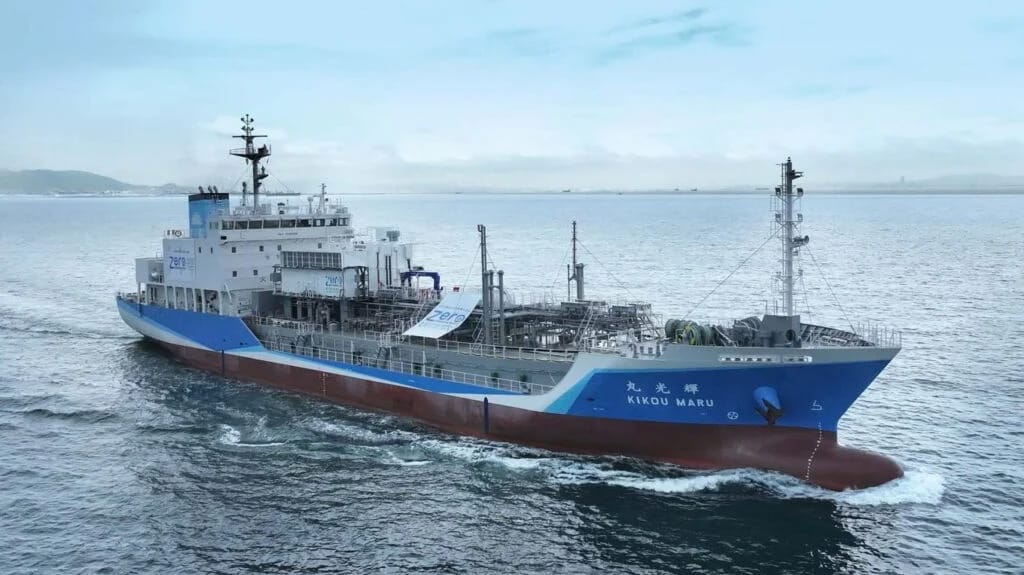
Japan completed what it is calling a world’s first as it successfully demonstrated a coastal tanker using a hydrogen-fired 4-stroke high-speed engine. It is part of an ongoing research and demonstration project sponsored by The Nippon Foundation to contribute to the decarbonization of shipping.
The project called for designing and demonstrating a 4,800-dwt tanker specifically designed for hydrogen propulsion. The coastal tanker Kikou Maro (IMO: 1015595) was launched on February 14, 2025, at the Nagasaki Yard of Fukuoka Shipbuilding Co., which was one of the members in the coalition for this project. The ship measures approximately 105 meters (344 feet) and was outfitted with two electric propulsion engines on two shafts. It was delivered in October 2025 to Uyeno TransTec.
When sailing, the tanker is driven by electricity generated by a hydrogen fuel engine in a container mounted on deck. It is also equipped with a hybrid generator and uses lithium-ion batteries to smooth the load and optimize fuel consumption.
The demonstration voyage lasted for about two hours on September 25. The tanker sailed approximately 20 miles in Osaka Bay using its hydrogen-fired engine as a carbon-neutral demonstration. The Nippon Foundation says it equated to a reduction of approximately 1.2 tons of CO2 emissions compared to conventional fossil fuels.
The vessel uses an engine designed by Yanmar Power Solutions. The first bench tests for the engine were completed in October 2024, during which it successfully operated at a rated output of approximately 500 kW. During the first tests, it used a small amount of diesel oil as a pilot ignition source to burn a pre-mixed mixture of hydrogen and air. Later testing was working to transition the engine to using HVO (hydrotreated vegetable oil) for its pilot ignition.
The project called for developing the engine, fuel supply system, and the hull design to achieve an AiP from ClassNK. It also developed the training and manual for the operation of hydrogen-fueled vessels.
According to The Nippon and Ueno TransTec, the demonstration voyage created valuable experience and knowledge. The goal is to develop a model and pathway toward the adoption of hydrogen for domestic, coastal shipping. Japan has committed to achieving carbon neutrality in the domestic shipping sector by 2050 and looks to develop it as a pioneering capability for its shipping and shipbuilding industry.
“This demonstration represents a significant step towards the practical application of hydrogen-fueled zero-emission ships and is expected to contribute to the promotion of decarbonization in Japan's shipping sector,” said Kazuma Kashiwagi, Director of the Environmental Bureau for Kobe City.
The Nippon Foundation launched the project in 2022 and assigned three consortia in June 2023 to develop different projects. In addition to the tanker, another team was focused on demonstrating a hydrogen fuel cell aboard an offshore wind turbine work vessel. Another project was working on a hydrogen-fueled engine for a tugboat, Ten’o, length 38 meters (24 feet).

that matters most
Get the latest maritime news delivered to your inbox daily.
The first demonstration of the hydrogen fuel cell was conducted in April 2024 using the 238-gross ton passenger vessel Hanaria. The team is working on additional demonstrations scheduled for 2026, working with the other teams in The Nippon Foundation’s Zero Emission Ship 2050 program. The team was also working on the development of infrastructure, hydrogen stations, to supply hydrogen fuel.
The tanker team considers its demonstration voyages a key step in the development of hydrogen technology. In addition to its work, several projects are also proceeding in Europe, including the MF Hydra, a liquid hydrogen-fueled ferry in Norway, and several inland barges in Europe. Fincantieri has floated this year two cruise ships being built for Viking that incorporate hydrogen power systems. The cruise industry has already begun testing fuel cells and hydrogen systems as a potential source of electric power for the hotel operations and in port to eliminate emissions.
