
Houthis Remain on the Sideline While Iran Threatens to Widen Conflict
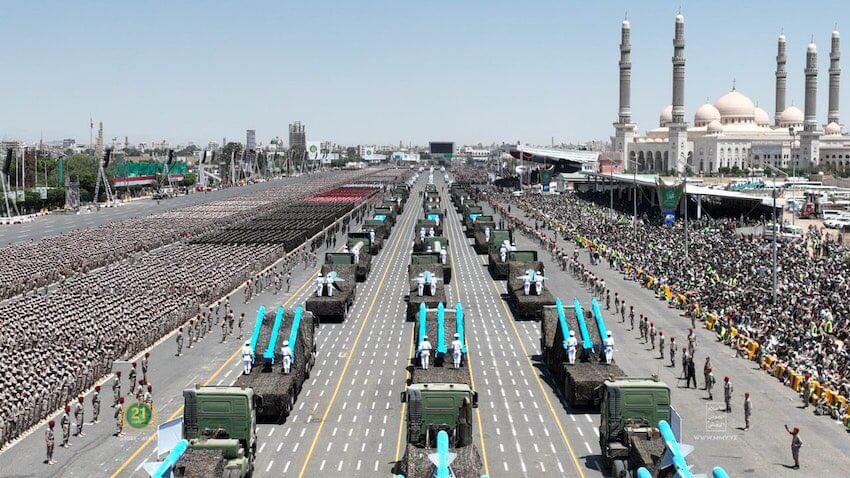
Senior political figures associated with the IRGC-dominated hardliner faction in the Iranian leadership continue to make escalatory threats in an attempt to pressure the United States to loosen its blockade on traffic entering Iranian ports.
The IRGC-linked semi-official news agency Fars has hinted that undersea cables may be at risk of attack, although Iran is short of the capability to carry out such a threat. A deputy to Iranian President Masoud Pezeshkian, Esmail Saqab Esfahani, has also threatened that if the ceasefire breaks down and attacks on Iran are widened to include infrastructure targets, then Iran has a prepared list of Saudi oil-related targets that it will attack.
Speaking on Iranian state television, Major General Ali Abdollahi Aliabadi said that he considered the interception of Iranian merchant traffic on the high seas to be a breach of the ceasefire, and that if such interceptions continued, then Iran would “not allow any exports or imports to continue in the Red Sea,” presumably making the presumption that the Houthis would respond to any IRGC demand that attacks should resume on merchant traffic in the Red Sea and Gulf of Aden. General Aliabadi, in his post as commander of Khatam-al Anbiya Central Headquarters, the joint headquarters exercising operational control of all Iran’s forces, has been in post since September 2025, the third incumbent since June 2025.
The Houthis have made their position on a resumption of attacks in the Red Sea very clear, although their position is nuanced. The Houthis' leader, Abdul-Malik Al Houthi, has made several speeches in which he has said his movement stands ready to undertake such attacks, but that the emphasis for the Houthis was the plight of the Palestinian people. In this context, the Houthis have carried out several “demonstration” drone and missile attacks on Israel, all of which were safely intercepted but which have not been repeated. But the decision to resume attacks in the Red Sea would be his alone, and for the moment, Abdul-Malik Al Houthi appears to be focused on maintaining the successful ceasefire with Saudi Arabia, which was agreed upon in March 2022, with the aim of fostering an environment in which the Houthis and Saudis can reach a final settlement to the war between them, which broke out in 2015.
Notwithstanding the pressures facing the Iranians, the Houthis appear to be sticking to their position, as evident, for example, in the face-to-face Saudi-Houthi engagement in the Military Coordination Committee held under UN aegis last weekend in Riyadh. Moreover, the Houthis have not made a fuss over the reappearance of USS Gerald R. Ford carrier strike group back in the Red Sea off Al Wajh after laundry and toilet repairs, noting that the carrier strike group is being kept well to the north in the Red Sea.
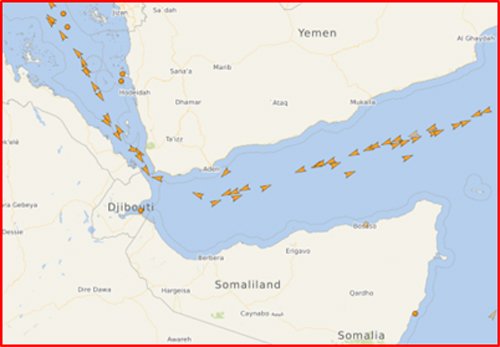
Tanker traffic in the southern Red Sea and Gulf of Aden still going strong, April 24 (VesselFinder)
While there appears to be no immediate desire on the Houthis’ part to resume Red Sea attacks, this intent could change very quickly, and those who might be impacted are making contingency preparations accordingly. Besides the presence of USS Gerald R. Ford carrier strike group within striking distance, Saudi Arabia has been reinforcing its forces on the Yemeni border. Qatari C-17s appear to have been lending a hand with this operation, probably flying in Bayraktar drones direct from Turkey to the primary border garrison station at Sharurah. The Qatari reinforcement is particularly significant, indicating that Saudi-Qatari military cooperation is once again active after a decade of political tension between the two countries.

that matters most
Get the latest maritime news delivered to your inbox daily.
The Houthis will also be aware that should they provoke further problems, the Saudi interest in fighting back is hugely magnified, now that Saudi oil exports to Asia from Yanbu are moving south through the Red Sea. Cutting off the bare minimum needed to keep critical services going in countries such as Korea and Japan would motivate others to join in as well. The Houthis also know that the United States is thinking of developing its political-military presence both with Somaliland and Eritrea, a development in their immediate neighborhood that the Houthis would not wish to nurture by being provocative at this juncture.
By going back to war, the Houthis risk more of the punishment that they suffered during the U.S. bombing called Operation Rough Rider. They also risk the Saudis moving from a policy of containment to one of resolution through the application of force.