
Giant Navy Shipyard Crane Departs Wisconsin on Long Tow to Hawaii
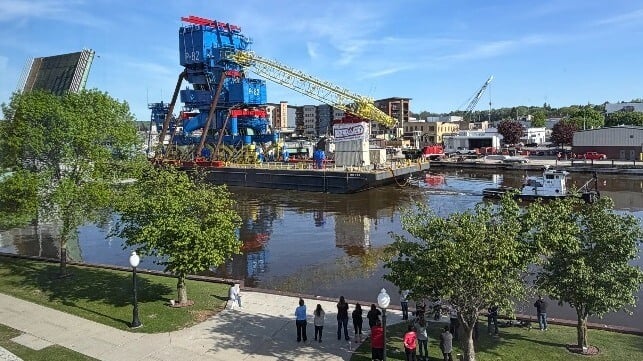
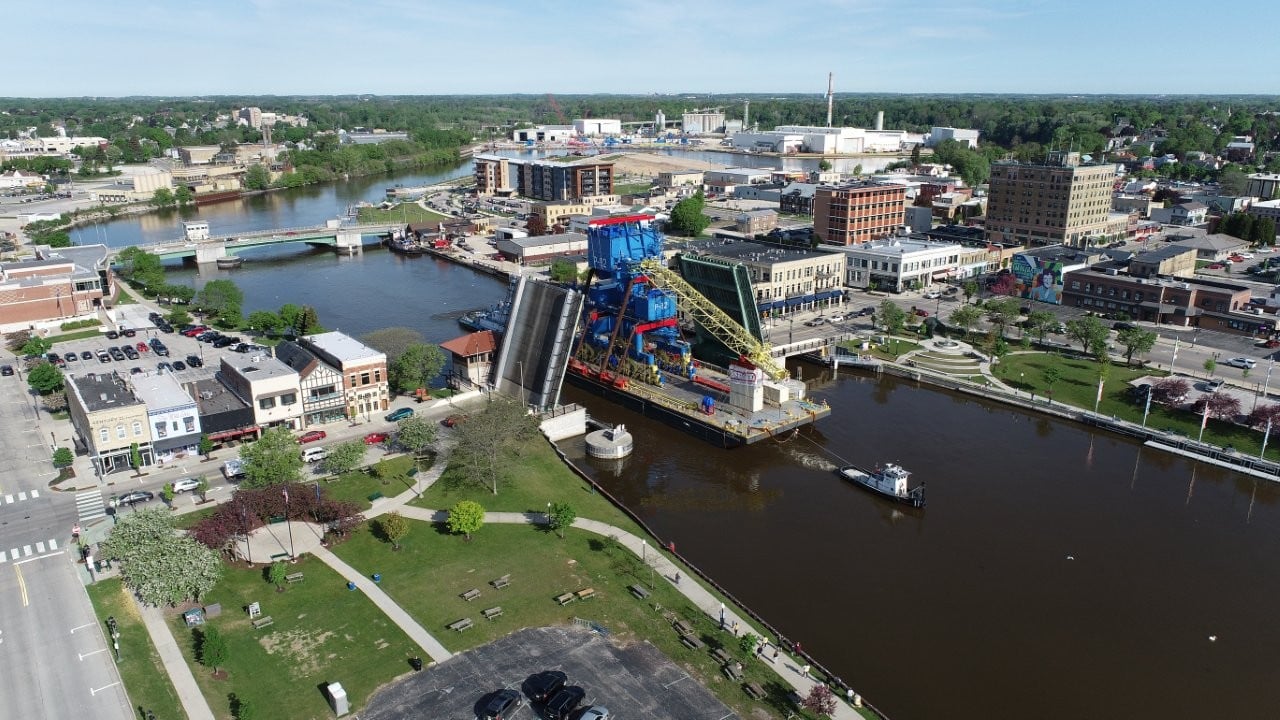
Giant portal cranes are a photogenic icon of the shipbuilding might of a past era, but a recent delivery from Konecranes suggest that they can be a sign of revitalization, too. Last week, a 200-foot-tall portal crane got under way from the manufacturer's site in Manitowoc, Wisconsin, bound on a 9,000-nautical-mile voyage to Pearl Harbor Naval Shipyard, Hawaii.
The newly-delivered portal jib crane is the P-82, a behemoth that will be installed at the Pearl Harbor Naval Shipyard. Dubbed "Big Blue," it is part of a $370 million contract to upgrade equipment at the four public shipyards, according to the Navy's Shipyard Infrastructure Optimization Project (SIOP). Securely lashed to a barge and braced for a long ocean transit, it is now under tow by the tug Ocean Tower - and attracting attention everywhere on the route out to sea.
SIOP / USN

that matters most
Get the latest maritime news delivered to your inbox daily.
The Navy signed an order with Konecranes back in 2019 for the first of up to seven cranes of this classic design, and P-82 is the second in line for delivery. It is a custom crane with a base built to deal with multiple different support rail sizes and shapes, as found at the Navy's historical shipyard layouts.
The PHNSY crane - technically a "weight-handling system (crane type)" for the Navy's planning purposes - will be able to lift components weighing up to 175 tonnes. It is part of a deep renovation of the shipyard and will drive (in part) on brand new tracks: As part of the yard's comprehensive modernization overhaul, the Navy's engineers are building out a new full-size graving dock, a rare project in the United States and the first at PHNSY since the Second World War. The $2.8 billion Dry Dock 5 is scaled to support maintenance of future submarine classes, including the Columbia-class ballistic missile submarine fleet, the most survivable element of the U.S. nuclear deterrent.