
France Opposes U.S. Involvement in Post-War Hormuz Security Mission
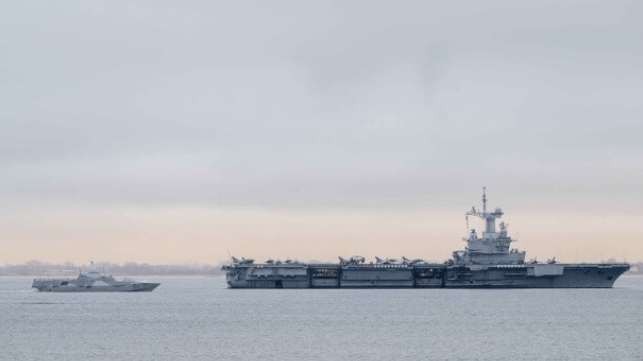
France is uninterested in allowing American forces to join a European-led coalition to police the Strait of Hormuz in a post-conflict scenario. This could put it at odds with Germany, where leaders have publicly stated a preference to take a cooperative approach with the U.S. Navy, Politico reports.
"We won’t enter into a coalition with the U.S.," an official close to the French presidency, speaking to the outlet, "and I don't think the Germans will either."
France has explicitly voiced its intention to launch the mission without American involvement, despite the U.S. Navy's abundant resources. French President Emmanuel Macron has said that only "non-belligerent countries" can join the coalition, ruling out the prospect of recruiting the U.S. forces currently involved in the naval blockade of Iranian seaports.
Part of the European concern is that EU naval forces could end up getting drawn into the U.S. blockade, or (at minimum) perceived as acting as a part of it. For this reason, the alliance has been at pains to emphasize that its activities would be strictly defensive, aimed solely at restoring shipowner confidence in the safety and security of the strait. The multinational patrol mission would not begin work until after a negotiated peace settlement between Iran and the U.S.

that matters most
Get the latest maritime news delivered to your inbox daily.
"Whatever the pressure, and there's been some considerable pressure, we're not getting dragged into the war," UK Prime Minister Keir Starmer said Monday in an address to Parliament.
On Friday, the leaders of Italy, France, Germany and the UK will meet again in Paris to discuss the Hormuz security coalition further. They will be joined by more than two dozen other nations (virtually) for a broad dialogue.