
ATSB Finding of a Faulty Switch Causing Engine Shutdown Changes Operations
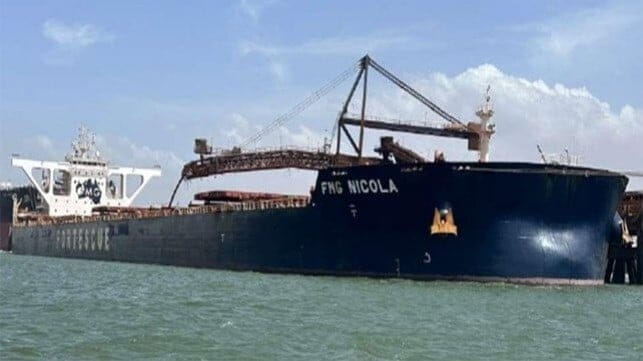
A fully laden iron ore carrier came within inches of grounding in a busy shipping channel in Australia in 2025 after an erroneous switch activation caused engine shutdown reports, Australian investigators. Following the investigation, the Fortescue company FMG International has amended engine management and instituted new safety checks across its iron ore fleet, while the Pilbara Ports Authority has taken safety actions, including improvements in machinery reliability, towage effectiveness, and structured emergency response.
A final report by the Australian Transport Safety Bureau (ATSB) has painted a picture of what could have been a major catastrophe after bulk carrier FMG Nicola (260,840 dwt) nearly grounded in the main channel at Port Hedland, Western Australia, on February 7, 2025. The ship was departing, transiting the busy channel, when its main engine unexpectedly shut down. It is a critical shipping lane that provides access to the world’s largest bulk export port by tonnage.
The investigation established that the 327-meter (1,073-foot) Singapore-flagged vessel lost propulsion due to a main engine low lubricating oil pressure emergency shutdown switch erroneously being activated while all other system parameters remained normal. The engine shutdown, which occurred some 6.5 kilometers (4 miles) due north of Port Hedland, instigated a high risk of grounding because the vessel was maintaining headway and avoiding damage to the stern while turning. The shutdown led the vessel to tracking along the edge of the charted shipping channel before the engine was restarted about eight minutes later.
The 2016-built carrier was saved from grounding by pilots who immediately took action to control the ship’s movement. At the same time, the port’s vessel traffic service was able to quickly mobilize additional tugs that managed to bring the ship clear from the channel side and take her back to sea safely. Luckily, there were no injuries among its 23 crewmembers or damages on the ship following the incident that ATSB described as serious.
“There was no evidence the ship came into contact with the sea floor, but as the ship tracked along the edge of the charted channel, there was an increased risk of grounding, which could have had significant safety, environmental, and economic implications,” said Angus Mitchell, ATSB Chief Commissioner.
Grounding of the ship could have had devastating impacts on the channel that provides access to Hedland, the world’s largest bulk export port by tonnage. The port handles over 500 million tonnes of cargo annually, with more than 95 percent of the volume being iron ore. Annually, the port boasts more than 6,000 ship movements.
Operated by FMG International, the ATSB report shows that the events leading to the serious marine incident involving FMG Nicola started to unfold at 0832 when the ship completed loading 237,088 tonnes of iron ore at its berth in Hedland. The ship was due to depart for Dongjiakou, China, that same afternoon.
At 1330, three harbor pilots boarded the ship to observe the departure. By 1348, the ship’s main engine and steering had been satisfactorily tested, while the master-pilot information exchange was completed in readiness for departure, which was to be assisted by four tugs. The report shows that FMG Nicola departed the port at 1442, and 18 minutes later, the ship was turned to port to follow the channel at a speed of about 7 knots.

that matters most
Get the latest maritime news delivered to your inbox daily.
At about 1516, the ship’s main engine suddenly shut down while sailing at a speed of 8.3 knots, prompting the pilot to inform the tug masters that the ship had lost propulsion and directed them to help keep it in the channel. Quick action by the ship’s engineers was able to identify that the engine had shut down because the “main bearing and thrust bearing lubricating oil pressure low” non-cancellable trip had activated. The engineers determined that it had been activated due to the faulty operation of the pressure switch.
In its investigation, the ATSB concluded that the root cause of the main engine shutdown was an intermittent malfunction of the lubricating oil low-pressure switch, which triggered an engine emergency stop despite all system parameters being normal.
