


Shipping Through Hormuz Holds Steady, But Little Clarity on Peace Talks
After agreeing to cease hostilities once again, Iranian and American officials will be on hand for more talks in Doha, Qatar on Tuesday - though it remains to be seen if they will speak with each other.
Whether the two sides will meet - as claimed by the U.S. and by diplomats close to the negotiations - depends upon who is asked. President Donald Trump said Monday that Iran had asked for the meeting; Iran denied that there would be a meeting at all, and that the simultaneous presence of both nations' representatives in Qatar was an accident. Iranian Deputy Foreign Minister Kazem Gharibabadi said that instead, his staff-level delegation is going in order to talk with Qatar about the releasing of frozen Iranian funds from Qatari bank accounts, as laid out in the deal.
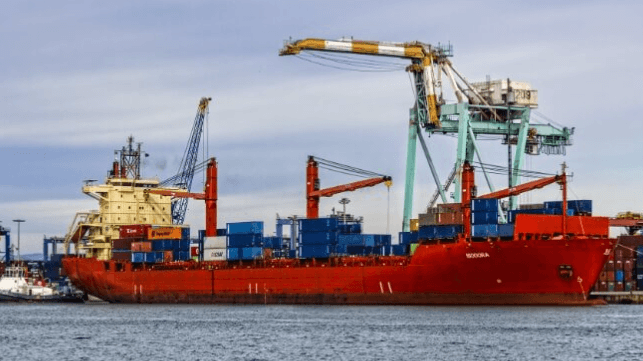
Conditions for shipping have loosened and fully 44 vessels made the crossing on Sunday using various channels, per shipping consultancy Windward. Inbound container ship services arrived in the Gulf for the first time on Monday with three transits linked to UAE-based Global Feeder Shipping LLC, a regional carrier. The ships included GFS Genesis (4,350 TEU), GFS Precious (3,500 TEU) and GFS Jade (2,400 TEU). Previous ports of call included harbors in India, Saudi Arabia and Pakistan.
Iran continues to assert its authority over the management of all affairs in the strait - including demining. IMO believes that there are as many as 80 mines located in the traffic separation scheme and surrounding waters. Most ships are currently using the southern (Omani) or northern (Iranian) alternative lanes, not the central TSS, where the heaviest mining is concentrated. On Monday, Iran's Gharibabadi rejected a French proposal to lead a mine countermeasures mission in the region.

that matters most
Get the latest maritime news delivered to your inbox daily.
"The vessels appear on Maersk, Hapag-Lloyd and MSC schedules, suggesting that major-carrier boxes may once again be using feeder-linked Gulf services," said data consultancy Kpler in an advisory note.
Leading shipowners have expressed concern that even if kinetic action in the strait subsides, the risk is still too high for full-scale resumption of traffic. "The routes available for navigation are extremely limited – they’re very narrow corridors," NYK CEO Takaya Soga told the Financial Times. "We’re still nowhere near returning to conditions before the closure of the Strait of Hormuz."
