


Iran Confirms Senior Naval Leadership Team
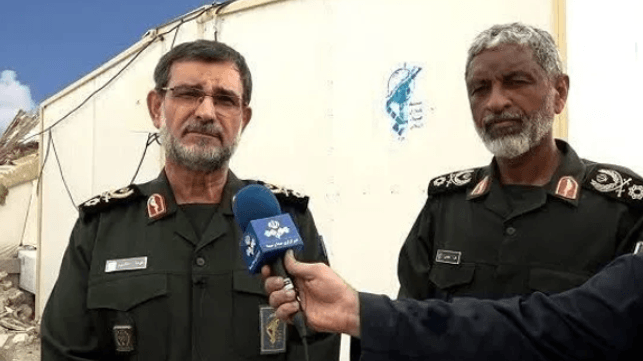
The ongoing funeral of the late Supreme Leader Ali Khamenei has brought out into the open a number of Iranian senior military commanders, who for understandable reasons have in recent months been somewhat reluctant to give any indication of their status and whereabouts. Both the overall commander of the IRGC and the commander of the IRGC Quds Force, responsible for overseas and proxy operations, have been seen at the ceremonies—both failing in attempts to remain inconspicuous.
Without a formal announcement having been made, it appears that Commodore Ali Azmaei has been moved up from his position as Deputy Commander of the IRGC Navy (Nedsa or Sepah Navy) to become Commander of the force, following the death from his wounds of Rear Admiral Alireza Tangsiri on March 30.
Before his appointment as the Deputy Commander, Pasdar Ali Azmaei as a commodore had been the long-standing commander of the Nedsa's 5th Naval Region, headquartered at Bandar Lengeh in Hormozgan Province, in that post since 2012. The Nedsa 5th Naval Region is responsible for the western approaches to the Strait of Hormuz, and also for the defense of Abu Musa and the two Tunb islands, which were seized in effect from the UAE by Iran in 1971. Azmaei has the distinction of having been sanctioned by the US Treasury's OFAC since 2019.
In August 2023, Commodore Azmaei played a prominent role in an integrated naval and missile exercise off Abu Musa, which combined fast patrol craft, land-based ballistic and anti-shipping missiles, plus sea and aerial drone activities. He has also frequently featured when the Sepah has seized or intercepted ships in Iranian waters.
The Sepah Navy sits firmly in the vanguard of the hardliner faction within the spectrum of the Iranian ruling elite. It is proud of its decisive role as the "Guardian of the strategic Strait of Hormuz," and during the recent funeral ceremonies has predicted that "divine vengeance" will be visited upon "terrorist America." Operationally, the Nedsa has created a strategic bargaining chip by its actions in the Strait during the recent wars, but has also managed to maintain operational coherence and effectiveness, notwithstanding attacks made on its command-and-control infrastructure and many of its naval assets.

that matters most
Get the latest maritime news delivered to your inbox daily.
In a less comfortable position is the commander of the regular Iran Navy (Nedaja), who remains Rear Admiral Shahram Irani. He too made an appearance at the funeral ceremonies, threatening that Iran's enemies will face those "seeking justice for the blood of their dead," and "a firm claw that will smash their faces."
Admiral Irani made his threats on behalf of "Muslim fighters" rather than on behalf of his own service, which has largely been disabled or sunk by American naval action. Whereas the operational concept of the Sepah Navy has been validated by its performance during the war, the Admiral no longer has a navy to speak of, and the Nedaja's previous operational capabilities have been proved worthless. Hence the Admiral not only needs to rebuild sea-going capability, which he will struggle to do with Iran's limited budget and international influence, he will also need a new concept of operation that is less vulnerable to enemy action. Indeed, in line with some commentary seen in Iranian social media, the future of the Nedaja as a separate service may well be under review.
