
What Maritime Transition Means in Practice?
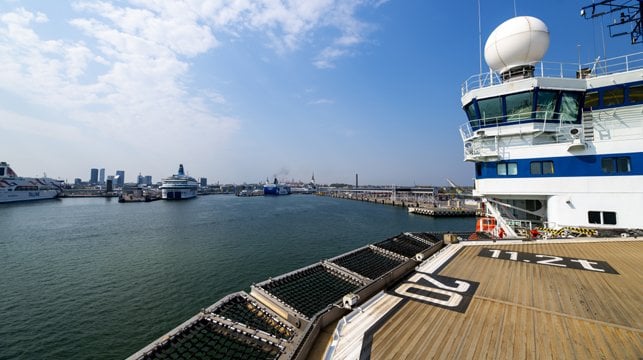
Across shipping, sustainability is no longer only an environmental issue, but increasingly a question of competitiveness, resilience, and operational readiness. The real test is no longer whether the sector wants to decarbonize, but how quickly it can move from pilot projects to large-scale deployment.
One of the biggest bottlenecks today lies in investment certainty, infrastructure readiness, and high costs of vessel retrofits. While ambitions are high, concrete decisions are often slowed by uncertainty around fuel pathways, regulation, and supporting infrastructure. Without more predictable conditions, large-scale investment remains harder to unlock.
Estonia’s Approach is Grounded in Implementation
Backed by a long-term vision, Estonia has increasingly framed maritime transition around implementation – from retrofit support and digital tools to port modernization and regional cooperation in the Baltic Sea region. One example is Estonia’s €25 million grant, funded by the EU Emissions Trading System, to support green retrofitting of ships in Estonian ports between 2025 and 2028.
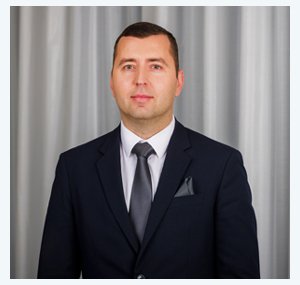 “The maritime transition will depend on practical implementation – how ports are electrified, how vessels are retrofitted, and how new technologies can be deployed at scale,” said Kristjan Truu, Deputy Minister for Maritime Affairs and Water Resources at Estonia’s Ministry of Climate. “The sector already has many of the ideas and technologies it needs. The key question is how to make them commercially viable, scalable, and practical to use. Coordination across ships, ports, and infrastructure plays a critical role here. That is why many of the most realistic near-term measures are not futuristic concepts, but solutions that can be implemented now.”
In that context, shore-side electricity (OPS), energy-efficiency improvements, and retrofitting existing vessels stand out as some of the most practical ways to reduce emissions in the short term. Longer-term pathways, namely alternative fuels – including methanol, hydrogen, and ammonia – are under development, however they will depend on market maturity, infrastructure development, and clearer investment signals.
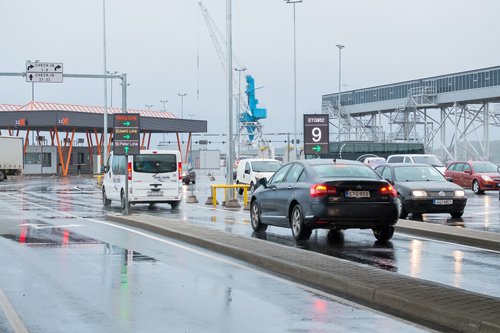
One practical example from Estonia is the Port of Tallinn’s Smart Port concept, which provides a holistic view of automated terminal operations, digital check-in smart gates, and automatic data gathering processes supported by e-documentation and Maritime Single Window solutions. Estonia has also used Maritime Single Window solutions at the national level for more than a decade, showing how digitalization can support both efficiency and sustainability in everyday port operations.
Another area where Estonia offers relevant examples is regional cooperation. The FinEst Green Corridor between Tallinn and Helsinki shows how ports, operators, cities, and public authorities cooperate to accelerate low-emission maritime transport. Estonia is also involved in wider Baltic and European cooperation on green shipping corridors on different multilateral fora and concrete projects.
As Truu put it: “The Baltic Sea region is rapidly becoming the model for green shipping corridors.”
The same practical focus is visible in Estonian companies working across the maritime value chain, from AI-driven engineering tools to retrofit. SRC has developed Methanol Superstorage technology to help solve one of the biggest retrofit challenges with methanol – how to fit more fuel storage into limited space. The solution has recently received Type Approval from RINA and can nearly double the fuel volume compared with conventional tank arrangements.
ShoreLink is supporting port decarbonization through shore power and charging solutions that help reduce emissions at berth. LTH Baas contributes retrofit, outfitting, and technical integration expertise for cruise ships and other passenger vessels. Its current work for Disney Cruise Line’s Disney Adventure includes the design, supply, prefabrication, and integration of piping systems, electrical networks, insulation, HVAC, and passenger cabins.
Other examples include Eumar Design’s lightweight bathroom and interior solutions for passenger vessels, Inspirators!’ AI-powered engineering tools for shipbuilding and offshore applications, and Primostar’s waterproofing solutions for concrete structures in ports.
On a route from innovation to large-scale deployment
At Seatrade Cruise Global 2026, these themes were reflected clearly in the panel discussion “The Future of Sustainable Cruising: Priorities, Pressures, Progress.” What stood out in the Seatrade discussion was not disagreement, but alignment: ports will play a central role in the transition, many near-term tools already exist, and the next stage depends less on inventing entirely new ideas than on scaling the solutions already available.
This is also where smaller maritime countries can play an outsized role. Estonia may not compete on size, but it can contribute through innovative pilot projects, retrofit capability, digital systems, energy infrastructure, and international cooperation. In that sense, one of the clearest conclusions from Seatrade Cruise Global was that shipping is entering a more demanding phase – one where implementation, coordination, and commercial realism matter just as much as ambition.
About Trade Estonia
As part of Enterprise Estonia, the official governmental business and innovation agency, Trade Estonia connects enterprises to a dynamic, innovation-driven economy, providing access to global markets. Trade Estonia also serves as a gateway for foreign enterprises seeking sourcing opportunities in Estonia, offering e-consulting services and facilitating connections with leading Estonian companies.
This project is funded by the European Union – NextGenerationEU and organized in collaboration with the Ministry of Foreign Affairs of Estonia.

This article is sponsored by Trade Estonia
The opinions expressed herein are the author's and not necessarily those of The Maritime Executive.
