
U.S. Navy Fighter Shoots Out the Rudder of an Iranian Tanker
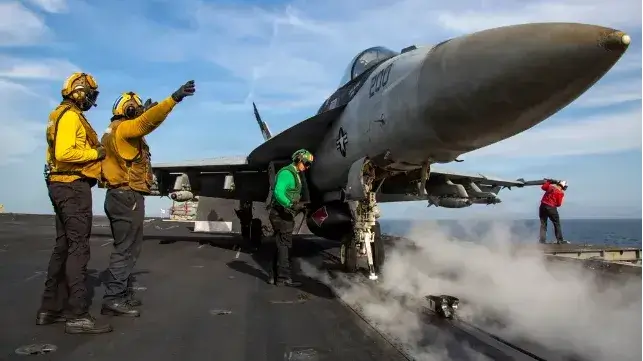
The U.S. military is matching Iran's new kinetic methods of blockade enforcement, switching to more forceful means to prevent an inbound tanker from running the naval cordon in the Gulf of Oman.
According to the U.S. Central Command, the sanctioned, Iranian-flagged tanker Hasna (IMO 9212917) was under way and attempting to reach a port on Oman's Gulf of Oman coastline. U.S. forces issued several warnings to the Hasna's crew to cease movement or turn around, but the Hasna did not comply.
To enforce the blockade, CENTCOM dispatched an F/A-18 Super Hornet from USS Abraham Lincoln to take kinetic measures. At about 0900 Eastern Time on Wednesday, the fighter used its 20mm cannon to target the vessel's rudder, disabling Hasna and compelling her crew to stop transiting to Iran. (On a large tanker in ballast, the upper half of the rudder is out of the water and vulnerable to targeting.)
"The U.S. blockade against ships attempting to enter or depart Iranian ports remains in full effect," the command said in a statement. "CENTCOM forces continue to act deliberately and professionally to ensure compliance."

that matters most
Get the latest maritime news delivered to your inbox daily.
The fighter-strike method of blockade enforcement could improve CENTCOM's ability to tighten the interdiction campaign against Iranian shipping, without requiring scarce surface combatants or manpower-intensive boardings. Tanker-tracking experts have observed leakage through the American blockade, particularly westbound tonnage transiting in ballast. These empty tankers are critical to to Iran's ongoing effort to keep oil production high, as the vessels provide extra floating storage - extending the time horizon before Iranian producers have to begin shutting in wells for lack of a place to put more oil. Shut-ins risk damage at wellheads and long-term lost production; the administration has attempted to turn that risk into a ticking countdown clock in a calculated effort to pressure Iran into political concessions. Tanker storage has given Iran the ability to keep pumping for weeks after many analysts' early expectations, thereby lessening long-term economic harm from the blockade and making it easier to resist U.S. demands.
PHOTO OF THE DAY: Far from exploding, Iranian oil wells are pumping and pumping (don't believe everything the White House says).
— Javier Blas (@JavierBlas) May 6, 2026
According to @CopernicusEU Sentinel-2 imagery, Iran was loading today three (3 !!!) tankers simultaneously at Kharg Island (????????? May 6 @ 7.16am GMT) pic.twitter.com/9747leWAs7