
Trump Orders Partial Blockade of Venezuela's Oil Exports
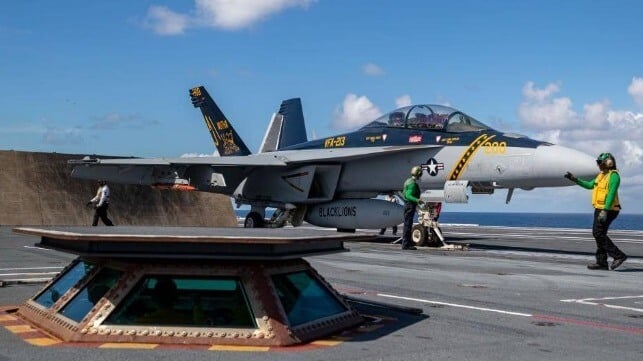
On Tuesday, President Donald Trump declared a naval blockade on all sanctioned tankers transiting to and from Venezuela. The declaration turns the seizure of a single tanker into an explicit policy, with significant implications for Venezuela's oil exports - already grinding to a halt from the implicit threat of interdiction.
"Venezuela is completely surrounded by the largest armada ever assembled in the history of South America. It will only get bigger," Trump said. "I am ordering a total and complete blockade of all sanctioned oil tankers going into, and out of, Venezuela."
Even before the statement, Venezuelan tanker traffic was already behaving as though a blockade existed. As of Monday, at least four non-sanctioned tankers had already turned around midvoyage rather than attempt to make a transit to a Venezuelan loading pier, according to Reuters.
The text of Trump's statement covers sanctioned vessels only, raising the possibility that some amount of oil trade will continue. According to TankerTrackers.com, about 60 percent of Venezuela's oil trade ships aboard unsanctioned vessels, some in the shadow fleet, others in various shades of normalcy.

that matters most
Get the latest maritime news delivered to your inbox daily.
One segment of this trade occurs in daylight: oil cargoes owned by Chevron and dispatched under the auspices of a specially-permitted Treasury license for the oil major's joint ventures in Venezuela. These shipments belong to Chevron and do not generate revenue for the Venezuelan government, per the American oil major's operating license. Chevron has operated in the country for more than 100 years, and Chevron-affiliated projects now produce about a third of Venezuelan oil. About half of the crude output from these projects belongs to the Venezuelan government, and is sold to foreign buyers, according to the Wall Street Journal; the other half is shipped to Chevron's refineries and customers.
The decision to call a program of tanker interdictions a "blockade" may have legal consequences. A naval blockade is a formal act of war under international law, and could lead to heightened scrutiny of the operation at home and abroad; some of Trump's critics have warned that even a partial blockade would require authorization from Congress, the branch of government with the ability to declare war.