
Study: Asian Ports Need $12B a Year in Investment
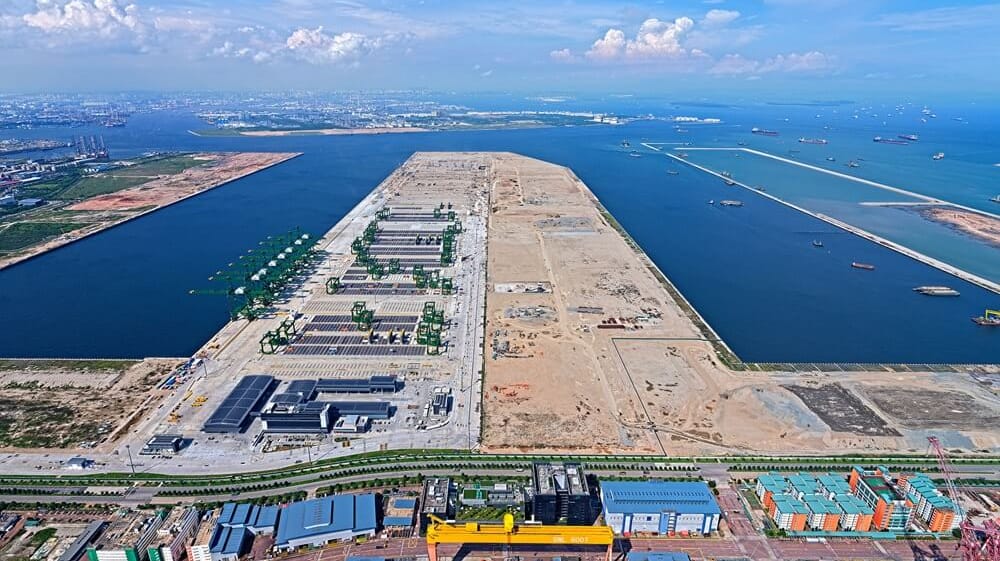
As an emerging economic powerhouse, the East Asia and Pacific region has become one of the most trade-dependent regions in the world. At the heart of this trade is a strong reliance on efficient ports, ships and fuel supply chains. For instance, China has made massive investments in its ports sector, delivering unparalleled efficiency for its trade-centered economy. But a recent World Bank report is warning of rising systemic weaknesses affecting maritime transport across the Pacific region.
In the port sector for instance, capacity expansion must keep up as the region’s marine sector is entering a new phase of development. Container trade in the region is projected to grow by about four percent annually, which will require Asian ports to handle an additional 300 million TEUs by 2040. To accommodate such cargo volume, the bank estimates that ports will have to invest $90 billion for additional handling capacity, translating to $6 billion a year.
If additional dry bulk and liquid capacity is factored in, annual port investment needs are expected to reach $12 billion. China will account for about 65 percent and the ASEAN-5 (Indonesia, Malaysia, Philippines, Singapore and Thailand) about 25 percent.
Notably, as the global maritime sector pursues decarbonization, ports in developing Pacific countries will need substantial investment in storage, bunkering and safety systems for alternative fuels. The bank assessed three investment pathways through to 2040. The main scenario will cost $1.2 billion, targeting a region-wide development of alternative fuels value chain. There is also the domestic scenario to cost about $500 million, aiming at targeted investments in selected domestic ports, specifically those with regional hub status.
But even as the Asia-Pacific tries to align with global decarbonization goals, declining maritime safety is another area of concern for the region. To a great extent, this challenge has been exacerbated by the aging domestic and regional shipping fleet. The average age of ferries, coastal cargo ships and interisland vessels in several Southeast Asian countries is above 30 years old. This is less an issue with the internationally-trading Asia-Pacific fleet, the youngest and most advanced technologically: Nearly 70% of vessels in this segment were built in 2010 or later.

that matters most
Get the latest maritime news delivered to your inbox daily.
The focus therefore is renewing the domestic and regional fleet, currently dominated by small carriers operating fewer than 10 vessels. Besides the aging fleet, the short-sea shipping in the region also utilizes repurposed vessels, not originally designed for their current service profile. The World Bank estimated that replacing the regional fleet will require about $97 billion, plus a $14.5 billion premium if dual-fuel capability is adopted. However, unlocking this scale of investment in domestic and regional shipping is unlikely without government incentives.
The report adds that the fleet renewal presents an industrial opportunity for Asia-Pacific countries gunning to revive their domestic shipbuilding industries. A case in point is Indonesia, which – though it has more than 340 shipyards – only builds one million dwt per year of new tonnage. Large scale domestic procurement of new ferries and ro/ro vessels could create stable demand and reduce unit costs.
