
Samsung Heavy Industries Cancels Tanker Linked to Sanctioned Manager
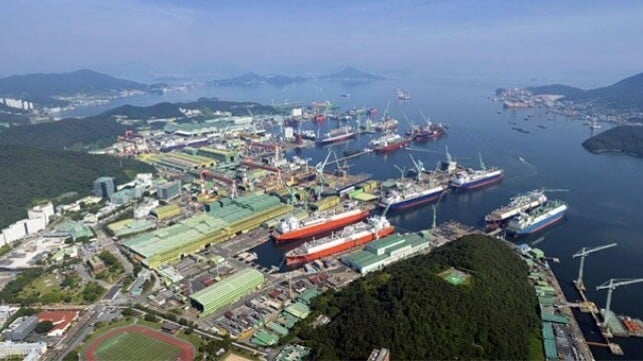
According to a stock exchange filing, Korea’s Samsung Heavy Industries canceled the delivery of the first of two crude oil tankers just as the vessel was due to be delivered. It cites the “shipowner’s financial difficulties,” warning that the second vessel could also be revised, while the speculation is that these tankers were ordered as part of a network linked to shipping Iranian and Russian oil.
The contract was reported in June 2023, and, in the style of the South Korean shipbuilders, it was only referred to as an order by “Oceanic region shipowners.” It was valued at approximately $170 million for the two tankers to be delivered by the end of February 2026.
“The shipowner failed to pay the final installment for one of the two crude oil carriers,” Samsung Heavy Industries writes in the filing. “We have exercised our contractual right to cancel the contract.” It also warns, “The delivery date of Vessel No. 2. May change depending on the shipowner’s circumstances.”
Since the order was placed, there has been speculation in the industry linking the tankers to UAE-based vessel management firm Teodor Shipping or possibly one of its subsidiaries, such as Marshall Islands-based shipping company Cora Lines. The details of the order were never publicly disclosed, and Samsung Heavy Industries has repeatedly denied that it was working with a sanctioned entity.
The United States in June 2025 linked Teodor to “part of the vast shipping empire” controlled by Mohammad Hossein Shamkhani, the son of Ali Shamkhani, a top political advisor to the Supreme Leader of Iran. The U.S. Treasury Department asserted that Hossein “leveraged corruption through his father’s political influence at the highest levels of the Iranian regime to build and operate a massive fleet of tankers and containerships.” It said the network transports oil and petroleum products from Iran and Russia, as well as other cargo, to buyers around the world, generating tens of billions of dollars in profit.
Treasury reported it was listing 115 entities in June 2025 tied to the network. Concurrently, the U.S. Department of State designated 20 entities and identified 10 vessels as blocked property. The actions included Theodor, Cora, and many other companies, which appeared to go underground or be disbanded after the action.
Samsung Heavy Industries made no connection between the orders and the network, only citing the failure of the buyer to make the latest payments on its contract. It reports that the first vessel was canceled and the contract was recast at a value of approximately $78 million. The contract is still dated for completion at the end of this month.

that matters most
Get the latest maritime news delivered to your inbox daily.
The shipbuilder writes that it expects to cover the shipbuilding costs with the advancements already received. It also intends to sell the tanker, which is speculated to be a Suezmax vessel, to further cover the construction cost.
It is not the first time that sanctions were thought to impact the shipbuilders orderbooks. After the Russian invasion of Ukraine and the sanctions were imposed, Daewoo Shipbuilding and Marine Engineering backed out on contracts with a Russian shipowner, citing a failure of the shipowner, which was believed to be Sovcomflot, to make installment payments for the contracts. Samsung found itself in a similar situation for its orders with Russia’s Zvezda shipbuilding complex for the LNG carriers. Samsung Heavy Industries said it would cancel the orders but later accused Zvezda of breaching the contract and said it would sue for compensation.