
Low Water Levels Challenge European River Cruising
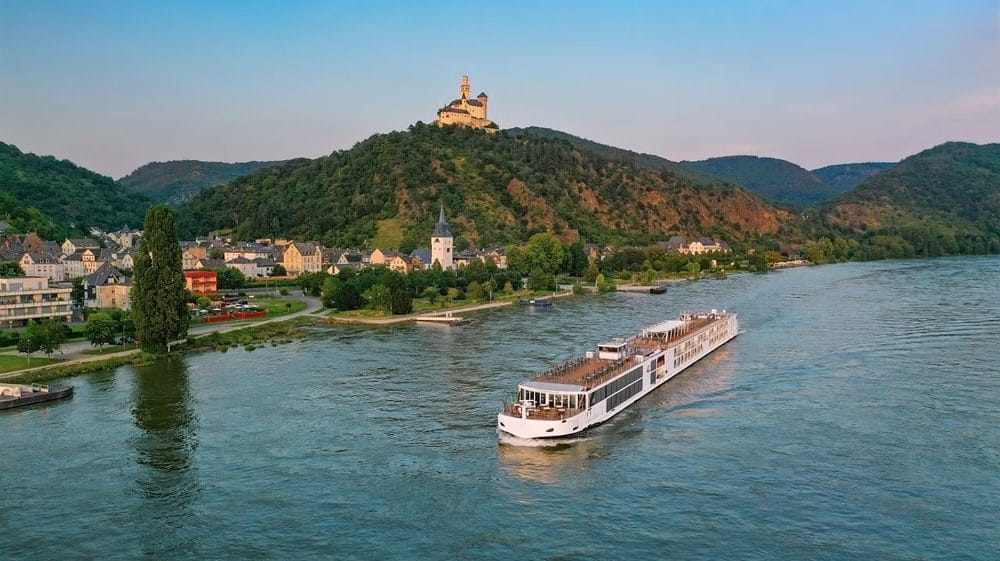
As Europe has suffered through record high temperatures and a drought, it has raised concerns over the impact on residents. In addition, it is also presenting issues for commercial shipping, including river cruising.
This summer has become extremely dangerous, with reports such as a doubling of France’s mortality rate. Experts are saying that as many as 10,000 additional people may have died so far this summer over normal mortality levels due to the heat. While the worst of the heatwave appears to be subsiding, other elements, ranging from wildfires to an extended drought, are continuing to take a toll.
At the end of last week, Hungary’s water authorities warned that the Danube was just over three inches above its record low levels set eight years ago. Several sections of the river have become impassable, they warned, although there was some hope that water levels might rise slightly in the coming week. Similarly, water levels on the Rhine have also fallen to low levels, impacting shipping. Although the German authorities said late in the week that there had been some relief.
Low water levels during the summer peak shipping season are not new to Europe’s primary rivers, but appear to be increasing in severity and duration. Inland cargo shipping along the rivers is key to many economies, and the companies have adapted new ship designs to enable low-draft operations. In Germany, for example, reports are that with the low water levels, cargo shippers have had to reduce their loads. It often requires several vessels to carry out one shipment, adding transport expenses for many businesses.
For the river cruise industry, it comes at a troubling time as it continues to report strong demand and hopes to continue its expansion. River cruising is just 10 percent of the overall cruise industry, but it is growing at several times the rate of ocean cruising. One report said that European river cruising grew at eight percent in 2024 to reach 1.5 million passengers. The industry trade group CLIA (Cruise Lines International Association) calculates that in the last decade, the river cruise market has grown at an annual rate of 10 to 15 percent.
The market is reported to have more than 380 river cruise ships active in Europe, with as many as 60 more on order. Major companies, including Celebrity Cruises, are entering the market (Celebrity has five river ships on order), while well-known, established firms, including AmaWaterways, Emerald/Scenic, TUI, and Viking, continue to expand their fleets. Ama just released details on its second “double-width” river ship, AmaRudi, due to enter service in 2027 as one of the largest river cruise ships in Europe. AmaWaterways plans to add 15 ships in Europe in the coming years, while Viking took delivery in June of two new river ships. With its committed orderbook, Viking expects to take delivery of 22 additional river ships by 2028, bringing its fleet to 114 river ships in 2028.
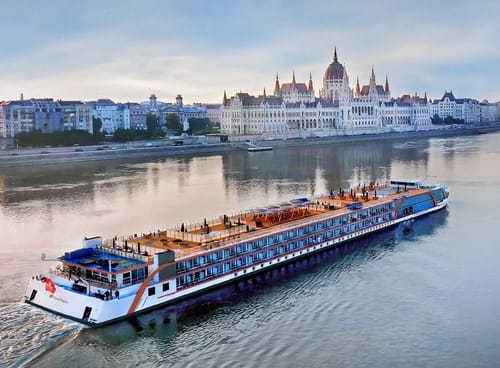
Double-width AmaMagna arriving in Budapest (AmaWaterways file photo)
Over the past few seasons, when they experienced droughts impacting water levels, the cruise lines have established strategies. The ships often dock parallel to the river, with possibly three ships and passengers crossing ships to reach shore. As the water levels fall, the lines sometimes position ships at key points along the river. Passengers are bused for their tours and switch ships to continue their itinerary.
This year is no exception. Some of the lines are reporting they have had to reroute some of their cruises or change embarkation and debarkation ports. Avalon Waterways reportedly had to switch cruises due to embark from Nuremberg to Passau. AmaWaterways had to disembark passengers above Budapest from the first of its double-width vessels, AmaMagna, and put them into hotels and on buses.
River cruise segments between Budapest and Vienna are being impacted by low water levels. Passengers have to travel by bus. It is especially significant for Hungary’s travel industry, where approximately 600,000 travelers take river cruises. Reuters writes that one operator reported an 18 percent decline in July bookings.

that matters most
Get the latest maritime news delivered to your inbox daily.
AmaWaterways on its website advises that it “closely monitors river conditions and has contingency plans in place should water levels affect navigation. Adjustments may include alternate docking locations, modified excursions, or ship swaps, ensuring your journey continues smoothly.”
For now, the river cruise lines plan to continue to adapt their operations to limit disruptions to their business. Longer term, they may be forced to find ways to alter their operations or develop new itineraries and programs to deal with what is becoming a persistent challenge on the rivers of Europe.
