
Japan Follows Up on Pledge to Strengthen Taiwan Posture
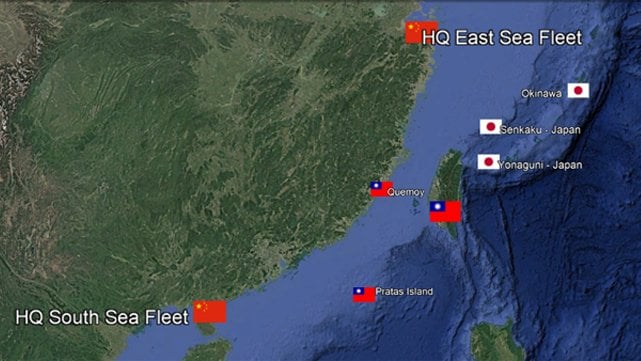
Japan has followed up on Prime Minister Sanae Takaichi's election promise to strengthen defense spending and to abandon Japan’s previous policy of strategic ambiguity regarding its response to any Chinese invasion of Taiwan. The Prime Minister said during the election that Japan will regard any Chinese intervention regarding Taiwan as a direct attack on Japanese maritime, economic, and security interests.
On February 8, Japan held a parliamentary election, and returned the sitting prime minister, Sanae Takaichi and her Liberal Democratic Party with a strong mandate and a two-thirds super majority. The Liberal Democratic Party won 316 of the 465 seats in the parliamentary election, overtaking the previous governing party record of 308 seats won by the Democratic Party in 2009.
Shinjiro Koizumi, the Japanese defense minister, told a press conference on February 24 that Japan is preparing to deploy Chu-SAM (Type-03) medium-range air defense missiles on the Japanese island of Yonaguni, which lies 70 miles east of Taiwan. Deployment planning and preparations are underway, and depending on progress, the full permanent air defense infrastructure will be in place at the earliest by 2030. It is believed, however, that field-deployed Chu-SAM systems are already on Yonaguni. The Defense Minister made no mention of deploying any similar capability on the Senaku Islands, the integration of which with an air defense system on Yonaguni would provide depth to what would otherwise be an exposed and isolated outpost.
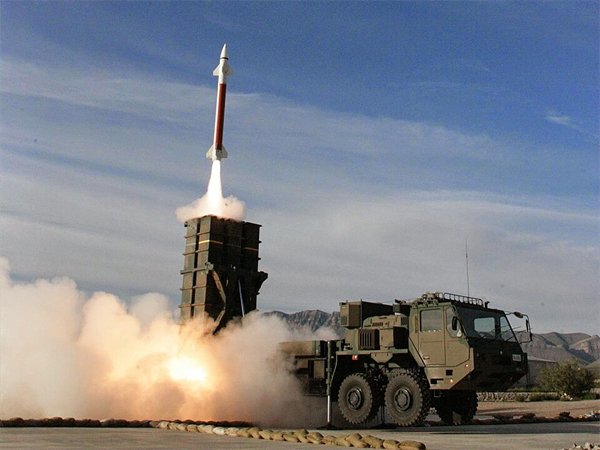
Chu-SAM (Type-03) medium-range air defense missiles (Japan Ground Self-Defense Force)
The plan has some political subtlety, as the Japanese Chu-SAM air defense system would not have the range from Yonaguni to engage targets over Taiwan. But it would be able to engage a Chinese PLA Navy and Air Force screen should they wish to encircle and blockade Taiwan, isolating it from reinforcement from the East
The Chu-SAM flies at Mach 2.5 and has an active AESA radar homing seeker plus inertial guidance. The system can track 100 targets and engage 12 targets simultaneously. The system is designed to integrate with the US Patriot system and is in contention for a number of overseas orders.

that matters most
Get the latest maritime news delivered to your inbox daily.
China has reacted negatively to Japan’s strategy, calling it “remilitarization” by the Japanese. China’s Ministry of Commerce announced yesterday, February 24, that it was implementing export controls on “dual-use items,” which could be involved in enhancing Japan’s military strength. China said its moves were to “safeguard national security” and cited its international obligations, such as non-proliferation.
It barred exports to 20 Japanese companies, including Mitsubishi, JMU, and others. It also placed 20 additional Japanese companies, including Subaru, ENEOS, Sumitomo Heavy Industries, and others, on a “List of Concern.” Companies are required to perform a risk assessment and provide a written commitment that dual-use items will not be used for Japan’s military purposes to export to these companies. These restrictions could include rare earths and metals that would be used with Japan’s missile systems.