
Iran Using Chinese Satellite to Target US and GCC Countries
Further startling information has been unveiled in a Financial Times report on how Chinese technology and weapons systems have been aiding the Iranians in their missile and drone campaign against neighboring states and US military targets in the region. The FT report appears to be a product of its own investigations and analysis, rather than a leak from an intelligence agency seeking to influence.
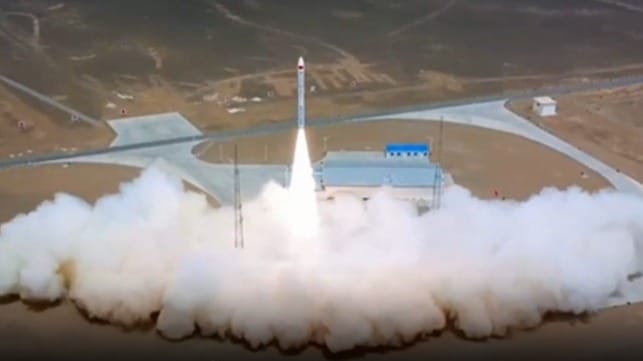
The FT report says that China supplied Iran with access to a TEE-01B imagery satellite built by Beijing-based The Earth Eye Co in March 2024, for which Iran paid $37m. The satellite, to which Iran’s IRGC Aerospace Force gained access, was already scheduled for launch in June 2024, and The Earth Eye Co was therefore recovering its sunk capital investment while also providing Iran with ongoing remote access to the satellite. This commercial arrangement with Iran is not advertised on the Earth Eye Co website, but similar deals appear to have been made with Malaysia and Oman. Under this system, the satellite’s coverage and imagery collection are controlled by a ground control station in China run by another Beijing-based company, Emposat, which Iran can access remotely—in effect from a laptop—without the need for any vulnerable infrastructure in Iran. Satellite ground control station infrastructure in Iran has been located previously and subsequently targeted. Both The Earth Eye Co and Emposat are commercial companies, albeit run by senior executives with close links to the Chinese political-military establishment; they are most unlikely to have made any deals that did not meet with the blessing of the Chinese Communist Party.
The TEE-01B satellite can capture imagery of “about 0.5m” resolution, at the top end of what is technically possible and broadly comparable to the very best commercial satellite imagery. Hitherto, early Iranian satellite efforts had been described by US Space Command General John Raymond as “tumbling webcams in space, unable to generate any useful intelligence.” More recently, the Iranians have worked with the Russians, launching their jointly built Khayyam satellite in August 2022 as part of the Russian Kanopus-V satellite constellation. Iran’s Khayyam, placed in a 500 km low Earth orbit, can probably capture 1 m resolution imagery—sufficiently accurate to target an area of a ship, but not necessarily a particular porthole. The Khayyam/Kanopus-V system is also handicapped by built-in delays in the transmission of data captured by the satellite back to its Earth station. However, from analysis of TEE-01B satellite passes and the timing of attacks, the Chinese system appears to offer not only higher-quality imagery necessary for precise targeting (such as hitting the radar dome of an AWACS aircraft or a key component in a refinery), but also better timeliness of delivery.

that matters most
Get the latest maritime news delivered to your inbox daily.
The analysis conducted by the FT linked passes of the TEE-01B imagery satellite to targets that were subsequently attacked by Iranian missiles and drones, as well as to further flyovers conducted to assess battle damage. Many of these flyovers were of US military targets that were accurately hit, including attacks on Prince Sultan Air Base in Saudi Arabia; Muwaffaq Salti Air Base in Jordan; the US Naval Support Activity in Bahrain; Ali Al Salem Air Base in Kuwait; and Erbil in Iraq. Civilian infrastructure attacked with similar cueing from passes of the TEE-01B imagery satellite includes the Duqm Special Economic Zone in Oman; the Alba aluminum plant in Bahrain; and the Khor Fakkan container port and Qidfa power/desalination plant in the UAE.
Perhaps aware of the forthcoming publication of the FT investigation report, Chinese Foreign Ministry spokesman Guo Jiakun made a press statement on April 14, claiming that Chinese arms exports had been “prudent and responsible,” and dismissing as “fabricated” incontrovertible evidence to the contrary.
