
Approval for Rome Cruise Terminal Cancelled by Italian Court
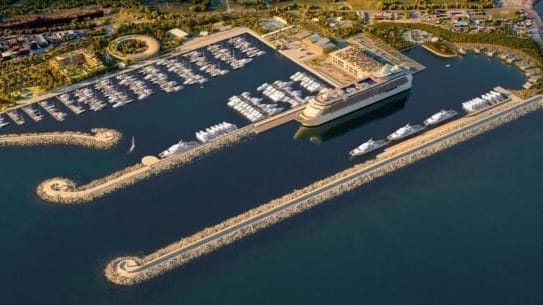
The efforts to develop a new cruise terminal that would be located closer to Rome and provide growth capacity were set back by an Italian court that rejected a key government approval. The project, which involves Royal Caribbean Group, is the latest example of the efforts by the cruise industry to expand port capacity and create modern terminals able to handle the mega cruise ships.
Known as the Fiumicino Waterfront Project, the plan is billed as a redevelopment of a neglected portion of the Italian coast approximately 20 miles from Rome. The Italian government has been in favor of the project, and in November 2025, a positive Environmental Impact Assessment Decree was adopted by the Ministry of the Environment and Energy Security. It also incorporated a positive opinion from the Ministry of Culture.
The plan for the development of the waterfront has evolved since it was first proposed in 2010 by a private Italian developer. They originally called for the construction of the largest marina in the Mediterranean with four docks as well as a hotel and convention center. It also allocated space for commercial development and luxury apartments. The developer, however, ran into legal problems in Italy and abandoned the proposal in 2012, with the concepts for the Fiumicino waterfront lying mostly dormant.
Royal Caribbean Group entered the picture in 2023, acquiring the land as part of a newly launched port development company called Cruise Terminals International (CTI), which is owned 90 percent by funds advised by the British iCON Infrastructure and 10 percent by Royal Caribbean Group. CTI owns Royal Caribbean’s Terminal A in PortMiami and is also developing cruise terminals in Ravenna, in northeastern Italy, and in Barcelona.
The developer of the project hailed the 2025 decree as “the first major step in the authorization process.” The Italian government had gotten behind the project in 2023, originally wanting it to be available for the Catholic Church’s Jubilee Celebration year and to expand tourism and employment.
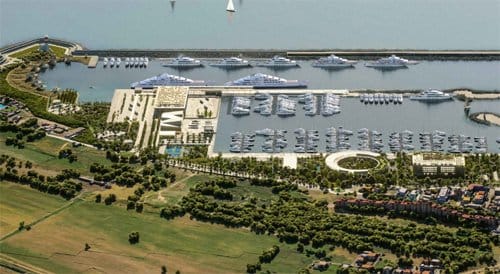
Original proposal centered around the Mediterranean's largest marina, a 1,200-slip port able to handle mega and giga yachts (CTI)
The original plan for a marina, however, was expanded as part of CTI’s proposed €600 million development. It highlights a 1,200-berth marina that would accommodate mega and giga yachts and provide public recreational spaces. Added into the plan, however, is a berth to accommodate one of the world’s largest cruise ships, such as one of Royal Caribbean’s 225,000 gross ton Oasis class vessels, which accommodate nearly 5,700 passengers (double occupancy) or a total of 6,700 passengers and more than 2,200 crew.
The port has a strategic position as it would be closer to Rome and the city’s primary airport, Fiumicino’s Leonardo da Vinci International Airport. It would also provide an alternative to the historic port of Civitavecchia, which is approximately 40 miles north of Rome.
Civitavecchia is a sprawling industrial port for cargo, ferries, and cruise ships. It is the largest cruise port in the Mediterranean. Last year, it handled more than 3.5 million passengers and another 1.5 million ferry passengers. Port officials highlight that it is growing rapidly. Cruise volumes were up 32 percent in the first three months of 2026, typically a quiet time for the seasonal operations. The port handled nearly 355,500 passengers in the first three months of the year, with 87 cruise ship calls. It points to strong growth in its home port operations for cruising.
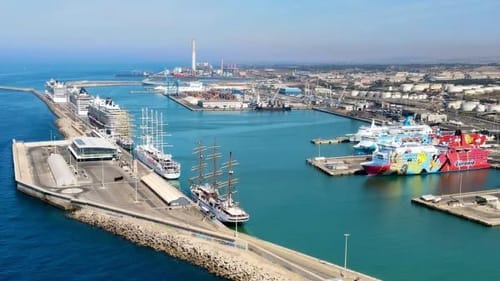
The new terminal at Fiumicino would be competing with Civitavecchia, the Mediterranean's largest cruise port (ADSP)
Critics call Fiumicino unnecessary and object to its potential environmental impact. They note it would redirect water at the mouth of the Tiber River. Adding the cruise terminal to the design also required lengthening the proposed breakwater from 800 meters to 1,200 meters. More than three million cubic meters of sand will have to be dredged, they contend.
CTI highlights the strong economic benefits to the region from the development, while saying the cruise element only uses about 20 percent of the total area. Royal Caribbean would be the anchor tenant, but it would be available to all cruise lines. CTI says the cruise terminal would only operate four days a week. Further, it has committed an additional €20 million for shore power at the cruise terminal for the ships and €12.5 million to the Fiumicino Municipality for public works beyond the port area, including access roads and other projects. They also promised to restore the old lighthouse and historical elements of the fishing operations at the port to preserve the culture and character of the port.
Locals who contend the coastline is being overdeveloped, environmentalists, and other groups, including a committee from the Fiumicino airport, challenged the environmental decree in court. They argued the approval was based on the original plan, with only the yacht marina and not the commercial cruise terminal. They also dismissed the claims of tourism benefits, arguing that the cruise passengers would be just passing through Fiumicino heading to Rome.
The regional Administrative Court found for the groups, annulling the decree on the grounds that it used the wrong administrative process. It ruled that the Fiumicino Waterfront project could not be called a tourist port as it was not limited to pleasure boats and required a more in-depth review as a multipurpose commercial port.

that matters most
Get the latest maritime news delivered to your inbox daily.
CTI has said it plans to appeal the court’s ruling. Otherwise, it would have to restart the environmental review, further delaying development of the project.
