
2025 Claims Data Shows That Shipping Has Come a Long Way on Safety
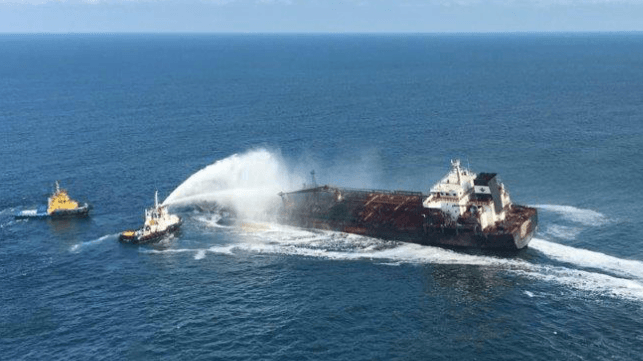
Despite heightened war risks and the rise of the poorly-maintained "shadow fleet," the shipping industry has become radically safer than it was just 10 years ago, according to the latest numbers from global insurer Allianz.
Even though the global fleet has grown, loss numbers have steadily fallen. In 2016, there were 127 total losses involving vessels over 100 gross tonnes, about one every three days on average. But in 2025, there were just 43 - less than one a week.
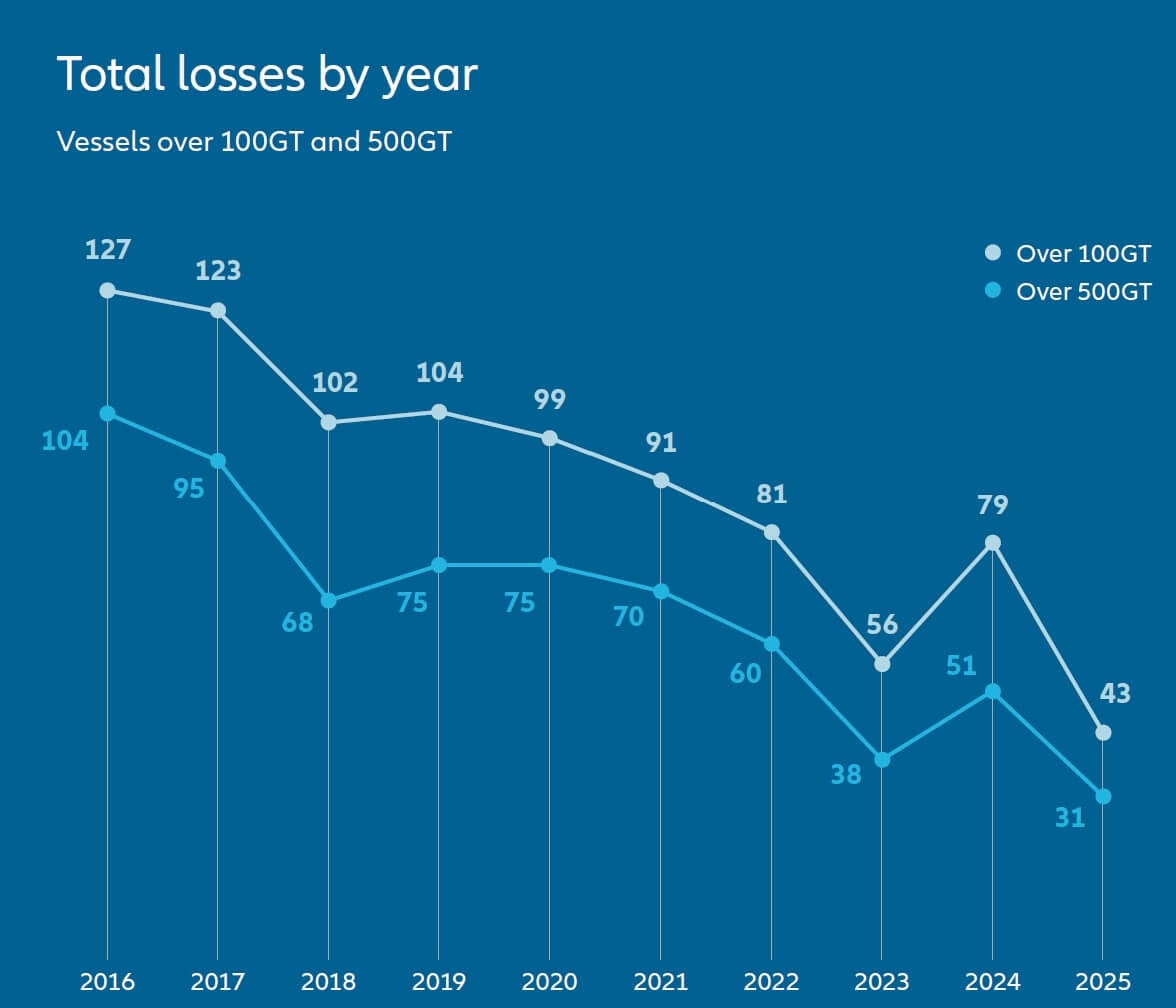
Courtesy Allianz
There are many factors behind shipowners' success in lowering the risk of major marine casualties. Allianz cites the industry's increased focus on safety measures, stronger regulations, improved ship designs, advances in technology (ECDIS) and better risk management (STCW, ISM Code).
While total losses have plummeted, fires and explosions remain a serious concern and persist at an elevated level, with 218 reported last year. The trend line is concerning: 2025 was the decade's second-highest year for fires, exceeded only by 2024.

that matters most
Get the latest maritime news delivered to your inbox daily.
Looking forward, Allianz expects war risk and geopolitical tension to play a proportionally greater role in casualty numbers. The Russia-Ukraine war and the U.S.-Israel-Iran war have both caused substantial damage to shipping this year, and the Mideast conflict is expected to result in high claims for P&I clubs in 2026.
The insurer expects maritime commerce to become less predictable in general in the years ahead, with fragmented trade routes, fluctuating bunker prices, new green fuels, new regulatory demands and climate-driven disruption. "Taken together, these forces are not cyclical but structural—fundamentally reshaping the industry’s operating model and ushering in a new era in which maritime trade is more complex, capital-intensive, and risk-exposed than at any point in recent decades," Allianz concludes.