


U.S. and Iran Trade Fire as Strait of Hormuz Tensions Continue
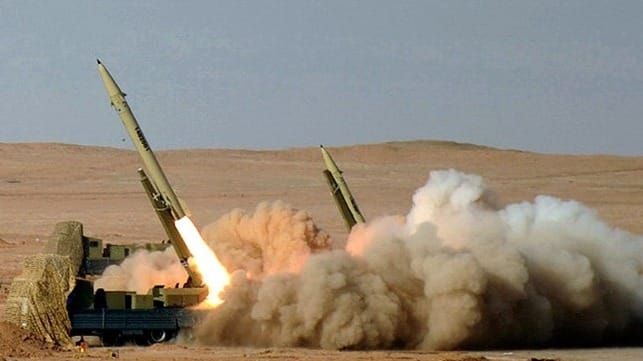
Over the weekend, Iranian and U.S. forces traded fire in a continued low-level contest over the control of the Strait of Hormuz. Five U.S. servicemembers were injured in a Saturday missile strike on an airbase in Kuwait, according to Bloomberg, and the same base was attacked again early Monday. U.S. forces emphasized that a ceasefire remains in effect despite the limited exchange.
At about 0615 hours local time, U.S. Central Command confirmed that it had carried out a series of "self-defense strikes" on Iranian radar and command and control positions. The strikes hit units on Qeshm and Goruk on Saturday and Sunday, CENTCOM said.
The command said that it attacked these Iranian positions in response to the shoot-down of an MQ-1 surveillance drone. U.S. fighters were dispatched to destroy a control station, Iranian air defense systems, and two suicide drones that "posed clear threats to ships transiting regional waters."
At about 0600 Monday, Iran launched at least one ballistic missile at a target in Kuwait. The missile was intercepted near Ali Al Salem Air Base, a Kuwaiti air station that hosts American forces. Kuwait's armed forces said that "hostile missile and drone threats" were being engaged, and warned the public to follow all safety advisories.
"In recent Iranian messaging, Kuwait has increasingly been portrayed as a potential target," advised analyst Danny Citrinowicz, formerly head of Israeli Defense Intelligence's Iran desk. Given recent tit-for-tat exchanges, "the greatest danger may not be a deliberate decision to go to war, but a gradual escalation driven by recurring incidents in an increasingly volatile environment," he added.

that matters most
Get the latest maritime news delivered to your inbox daily.
On Saturday, a previous Iranian missile strike on Ali Al Salem Air Base injured five American servicemembers and damaged two MQ-9 Reaper drones, according to Bloomberg. U.S. forces claimed that the single Fateh-110 missile was intercepted in mid-flight and that falling debris caused the damage.
Separately, the New York Times reports that U.S. Central Command has been taking a hand in the slow but steady trickle of traffic through Omani waters at the south side of the Strait of Hormuz. U.S. forces have coordinated with about 70 vessels leaving and entering the Gulf so far, officials told the Times, equal to about three ships per day - not enough to meaningfully change the strategic situation, but enough to demonstrate willingness to disrupt Iran's new status quo of control. The assistance involves communication with civilian trafficoi but falls short of a warship escort, officials said.
