
South Africa Plans to Prosecute Container Carriers for Price Fixing
South Africa’s Competition Commission has referred a case of alleged collusion and price fixing against eight of the world’s largest container carriers to its Tribunal for prosecution. The case alleges that for over a decade, the carriers conducted a price-fixing scheme.
The Commission, which operates under a 1989 law, investigates the cases and if it finds sufficient information, refers the situation to the Tribunal for prosecution. There is also a Competition Appeal Court. The process was set up after 1984 to “address past inequality and ensure access to the economy became a priority.”
The referral names eight shipping companies, including MSC Mediterranean Shipping, Maersk, CMA CGM, Pacific International Lines, Mitsui O.S.K. Lines, Evergreen, COSCO, and K Line. Each of the companies is actively involved in the South African market, carrying cargo either around the African continent to West Africa or to Asia.
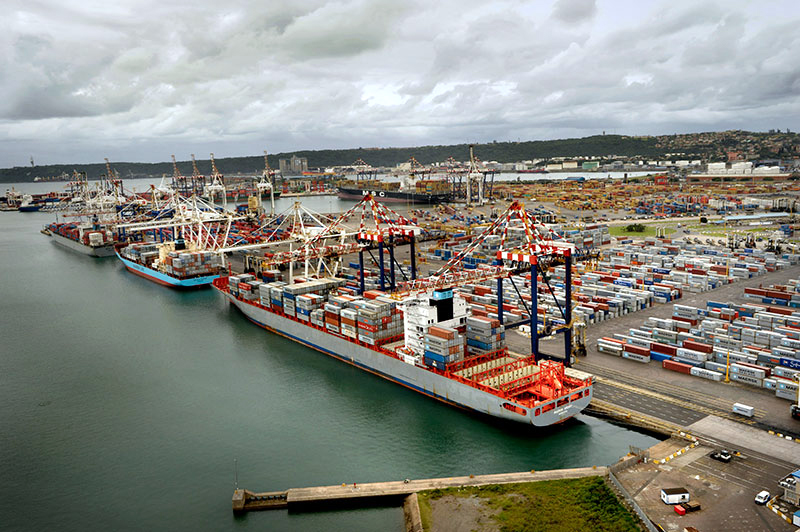
The Commission says the price fixing took place between 2008 and 2018 and was implemented through the fixing of rates called General Rate Increase. During its investigation, it says the eight companies were found to have charged the same General Rate Increase from the routes from Shanghai, Ningbo, and Shekou to Durban, as well as from Durban to Hong Kong, and between Durban and Qingdao. Durban is the country’s primary container port, handling the vast majority of imports and exports.
“The dismantling of the cartel will reduce the price of goods imported to South Africa for the benefit of consumers and will also reduce the costs of exports out of South Africa, which will, in turn, render the South African exports competitive in the world markets,” said Commissioner Doris Tshepe in a prepared statement.
The regulations forbid what are called “horizontal relationships,” that directly or indirectly fix the price of goods or trading conditions. The container shipping industry has faced similar allegations, with the United States citing the concentration of capacity within the major alliances, and European regulators also questioning the consolidation of the industry.
South Africa has already been at odds with the industry, citing the dependence on the international flag carriers for its trade. The country’s national flag carrier, Safmarine, was sold in 1999 to A.P. Moller-Maersk, and recently the company disbanded the brand name.
The South African government had been studying the idea of launching a new national flag carrier to reduce its dependence on international companies. At the beginning of November, it was reportedly shelving the concept for additional study.
The country has also suffered from shipping delays and backlogs at its ports, which have been blamed on poor management at the national company Transnet National Ports Authority and a lack of investment. Durban has been among the lowest-ranked ports in multiple surveys. Transnet moved to privatize the port, awarding a partnership to the Philippines’ International Container Terminal Services. Maersk’s APM terminals have been challenging the award in court.